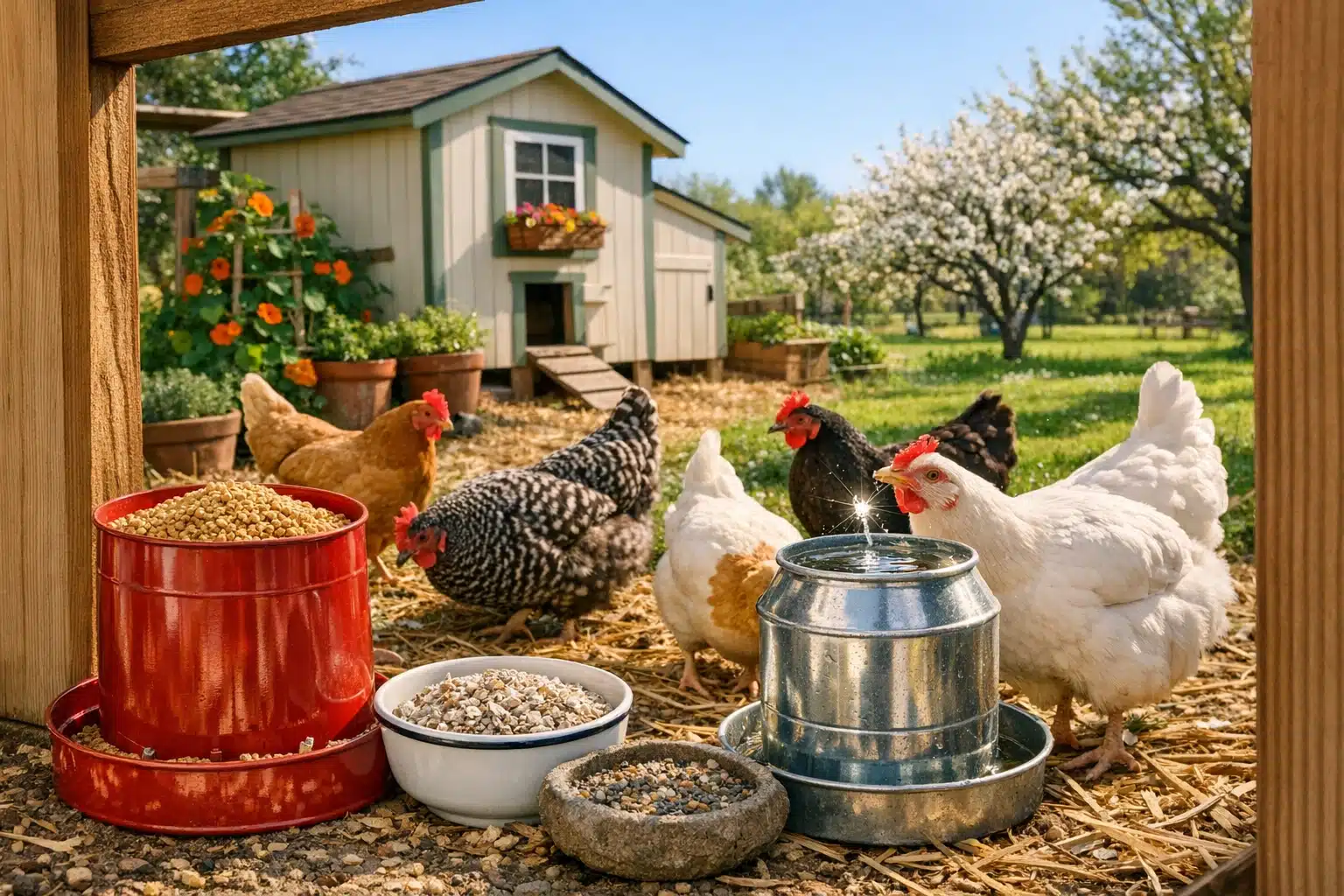
What to Feed Backyard Chickens: A Practical Guide for Healthy Flocks
Feeding backyard chickens sounds simple until you realize that a scoop of random grain will not support steady egg production, strong shells, clean growth, or long-term health. Chickens need the right balance of protein, energy, vitamins, minerals, grit, and fresh water, and those needs change with age, season, and purpose. A thoughtful feeding plan helps prevent waste, pecking, obesity, soft eggs, and many avoidable health issues.
Article Outline
- How a chicken’s age and purpose determine the right feed
- Which feed types, supplements, and treats are useful in a backyard flock
- What table scraps are acceptable and which foods should be avoided
- How feeding changes in summer, winter, molt, and free-range conditions
- How to build a reliable daily routine and spot diet-related problems early
1. Start with the Basics: Match Feed to Age, Purpose, and Nutritional Needs
The most reliable answer to the question “What should I feed my backyard chickens?” is this: begin with a complete commercial feed that matches the bird’s stage of life. It may not sound romantic, but good feeding starts with consistency, not guesswork. Chickens are efficient eaters when their diet is balanced, and most problems appear when the feed bucket turns into a mystery mix of corn, scraps, and whatever happened to be nearby that day.
Young chicks need a starter feed because they grow quickly and require more protein than adult birds. A chick starter commonly contains around 18 to 20 percent protein, helping build muscle, feathers, and bone. Grower feed for adolescent birds is usually a little lower in protein and calcium, often around 14 to 16 percent protein, because they are still developing but are not yet laying eggs. Once hens begin laying, a layer feed becomes important because it includes extra calcium to support eggshell formation. Many layer feeds fall in the 16 to 18 percent protein range and contain enough calcium for most laying hens when paired with proper management.
Not every flock fits neatly into one bag, though. Mixed-age flocks often do better on an all-flock or flock raiser feed, especially when hens can take oyster shell free-choice on the side. That setup allows laying hens to consume extra calcium as needed without forcing young birds or roosters to eat more calcium than they require.
-
Starter feed: best for chicks from hatch through early growth
-
Grower feed: useful for juveniles before laying age
-
Layer feed: designed for active laying hens
-
All-flock feed: practical for mixed groups when calcium is offered separately
Nutrition is more than protein and calcium. Chickens also need energy from grains and fats, amino acids for feathers and tissue, phosphorus for bones, and vitamins such as A, D, and E for immune function and development. Grit matters too, especially if birds eat whole grains, forage, or scraps. Chickens do not have teeth; their gizzard does the grinding, and grit helps that process. Fresh, clean water is equally essential. A bird can miss a treat without complaint, but a shortage of water can reduce feed intake and egg production quickly.
Think of complete feed as the steady beat of the drum. Everything else in the diet should follow that rhythm rather than compete with it. When flock keepers understand the purpose of each feed type, they make better choices, spend money more wisely, and avoid the common trap of feeding what chickens enjoy instead of what actually keeps them healthy.
2. Pellets, Crumbles, Grains, Greens, and Protein: What Belongs in the Everyday Diet
Once the correct base feed is chosen, the next question is usually about variety. Backyard chickens are curious, enthusiastic eaters. They chase beetles, inspect weeds, and sprint toward a tossed cucumber as if it were treasure. That natural appetite is useful, but it should be guided carefully. The everyday diet should still come mostly from complete feed, while extras play a supporting role.
Commercial feed comes in several textures, and each has practical differences. Pellets are compressed pieces of feed that reduce sorting and waste; many keepers find that birds leave less behind with pellets than with mash. Crumbles are smaller pieces that are easy for chicks and younger birds to consume. Mash is finely ground and can work well, but some flocks scatter it more. If feed ends up on the floor instead of in the bird, the cheapest bag may not be the most economical choice.
Scratch grain is often misunderstood. It is not a balanced daily ration. Scratch mixes are usually heavy in grains such as cracked corn, wheat, or milo, which provide energy but not enough protein, vitamins, or minerals to replace complete feed. Think of scratch as a snack or a training tool. It can be useful in cold weather in small amounts or for encouraging birds to return to the coop, but it should not dominate the menu.
Greens and insects can add enrichment and modest nutritional value. Chickens often enjoy leafy vegetables, pumpkin flesh, squash, cabbage, lettuce, peas, and herbs. Free-ranging birds may also eat grass tips, clover, seeds, worms, and insects. These additions bring variety and occupy active birds, yet they still do not replace a balanced ration. A hen that fills up on low-protein treats may lay fewer eggs or produce weaker shells.
-
Good occasional extras: leafy greens, chopped vegetables, plain cooked rice, oats, peas, mealworms in moderation, pumpkin, and unsalted scrambled egg
-
Best used sparingly: scratch grains, corn, bread, and fruit high in sugar
-
Always available: complete feed, fresh water, and grit when needed
Some keepers are tempted by homemade rations, and there is nothing wrong with exploring them carefully. The challenge is balance. A proper ration needs correct levels of amino acids, calcium, phosphorus, trace minerals, and vitamins, not just a pile of ingredients that sounds wholesome. Without formulation support, homemade diets can drift off course. For most backyard flocks, a high-quality commercial feed plus measured extras is the safer and simpler path.
The useful comparison is not “natural food versus bagged feed.” A better comparison is “balanced daily nutrition versus appealing but incomplete feeding.” Chickens may cheerfully eat many things, but good flock management means giving them what supports growth, feather condition, body weight, and reliable eggs. Variety is welcome. Balance is non-negotiable.
3. Table Scraps and Foods to Avoid: The Difference Between a Treat and a Bad Idea
Backyard chickens have a talent for making almost any scrap look acceptable. That does not mean every kitchen leftover belongs in the run. One of the most practical feeding skills a keeper can learn is separating safe extras from poor choices. Many household foods are harmless in small amounts, but some create digestive trouble, nutritional imbalance, or avoidable health risks.
A good rule is that treats and scraps should stay under about 10 percent of the total diet. This guideline matters because even safe foods can crowd out complete feed if offered too generously. A hen that fills up on pasta, bread, and melon may act delighted but still miss important nutrients. The result can show up later as thinner shells, weight gain, messy droppings, or lower laying performance.
Safe scraps usually share a few traits: they are fresh, simple, and not heavily seasoned. Plain cooked vegetables, chopped greens, small amounts of fruit, cooked grains, and plain proteins such as scrambled egg can all fit into a backyard feeding routine. Chickens can also eat many peels and trimmings, provided they are clean and not spoiled. If a food is rotten, moldy, greasy, or heavily salted, it should stay out of the coop.
There are several foods that deserve special caution or complete avoidance. Uncooked dried beans contain compounds that are unsafe for chickens unless properly cooked. Moldy foods are risky because molds can produce toxins that harm birds. Alcohol, caffeine, and chocolate are poor choices for obvious reasons. Very salty foods, greasy leftovers, and heavily processed snacks can stress the digestive system and add plenty of calories without useful nutrition. Avocado flesh is debated in backyard circles, but the safest course is to avoid feeding avocado peel and pit. Raw onion and strong-flavored foods are not usually emergency-level hazards in tiny amounts, but many keepers avoid giving large quantities because they may affect egg flavor and reduce feed usefulness.
-
Better choices: plain vegetables, greens, modest fruit, cooked grains, and simple proteins
-
Limit sharply: bread, pasta, corn-heavy treats, sugary fruit, and leftover baked goods
-
Avoid: moldy food, uncooked dried beans, alcohol, caffeine, chocolate, heavily salted scraps, and spoiled leftovers
It also helps to distinguish between “can eat” and “should eat often.” Chickens can peck at many things, but that does not make them good staples. If you toss scraps, do it with intention. Offer small amounts after the birds have already had access to their main feed. Observe what gets eaten, what gets trampled, and what attracts pests. The chicken yard should smell like fresh bedding and feed, not like a neglected compost pile.
Used wisely, scraps can reduce waste and add interest to a flock’s day. Used carelessly, they turn a balanced diet into a buffet of nutritional shortcuts. Backyard keepers do best when they treat scraps as an extra, not a foundation.
4. Feeding Through the Seasons: Heat, Cold, Molt, Free-Ranging, and Other Real-Life Changes
A feeding plan that works beautifully in April may need adjustments by August or January. Chickens live close to the weather, and their appetite, water intake, and energy needs shift with the season. If the flock races out on a cool morning like a squad of tiny feathered commuters, then sprawls in the shade by noon with open beaks, the message is clear: conditions matter.
Hot weather often reduces feed intake. Birds may eat less when temperatures rise, yet they still need nutrients. That makes feed quality especially important in summer. Cool, clean water becomes a top priority, and drinkers should be checked more than once a day during heat waves. A standard hen may drink roughly 250 to 500 milliliters of water a day, and much more in extreme heat. Wet treats like cucumber or watermelon can help with hydration, but they should not replace water or balanced feed. Feeding in the cooler morning and evening hours often improves intake.
Winter creates a different challenge. Birds burn more energy maintaining body temperature, especially in windy or damp conditions. Some keepers offer a small amount of scratch grain in the late afternoon so birds have extra fuel overnight, but this works best as a supplement rather than a substitute for regular feed. Corn is often treated like a miracle winter food, yet too much can dilute the diet. The better strategy is to keep complete feed available and protect it from moisture and rodents.
Molt is another important season in the chicken calendar. As birds replace feathers, they need more protein because feathers are made largely of protein. Hens may lay less or stop laying altogether during a hard molt. Many keepers shift temporarily to a higher-protein feed, such as an all-flock or grower formula, or add modest protein-rich extras. The goal is support, not overfeeding. Patience helps too; a molting hen can look ragged, but good nutrition and time usually restore her condition.
Free-ranging changes the picture but not the rules. Birds that roam may find insects, seeds, and green matter, reducing boredom and adding nutrients. Still, forage quality varies by season, yard size, rainfall, and plant cover. A suburban lawn in late summer is not a complete pantry. Free-range hens should continue to have access to balanced feed, especially if egg production is expected.
-
In heat: protect water, feed during cooler hours, and keep treats light
-
In cold: maintain full feed access and use scratch only sparingly
-
During molt: support with adequate protein and avoid unnecessary stress
-
When free-ranging: treat foraging as a bonus, not a replacement
Seasonal feeding is less about dramatic changes and more about smart adjustment. Watch the flock, watch the weather, and let practical observation guide the menu.
5. Build a Simple Feeding Routine and Know What Healthy Birds Look Like
The best feeding program is one you can follow without confusion on busy weekdays, rainy mornings, or holidays when life gets in the way. Chickens thrive on rhythm. A practical routine reduces waste, keeps birds calmer, and makes it easier to notice problems before they become expensive or stressful.
For most standard laying hens, daily feed intake often lands around 100 to 120 grams per bird, roughly a quarter of a pound, though breed, climate, activity level, and production will affect that number. Bantams usually eat less, while larger breeds may eat more. Instead of chasing exact figures, use them as a starting point. Fill feeders in a way that encourages consistent access without leaving old feed to sit too long. Feed should smell fresh, not stale or sour.
Placement matters. Keep feeders dry and slightly off the ground if possible to reduce contamination from bedding and droppings. Store feed in sealed containers to protect it from moisture, wild birds, and rodents. A good ration loses value if it becomes damp, moldy, or repeatedly raided by mice. Fresh water should be as dependable as sunrise. Clean containers regularly, because biofilm and debris build up faster than many keepers expect.
Routine also helps with observation. Healthy birds usually have bright eyes, smooth movement, and steady interest in food. Egg production, shell quality, feather condition, droppings, and body weight all give clues about whether the diet is working. If shells become thin, hens stop laying unexpectedly, or birds gain too much weight, the feeding plan may need review.
-
Possible signs of too many treats: obesity, less interest in balanced feed, messy waste, and reduced laying consistency
-
Possible signs of poor balance: thin shells, feather wear, slow growth, or weak body condition
-
Useful checks: monitor feed disappearance, inspect for waste under the feeder, and compare body condition across the flock
It is also smart to tailor routines to flock behavior. Dominant birds may crowd timid hens away from the feeder, so adding another feeding point can help. In mixed flocks, roosters, pullets, and laying hens may all need slightly different management. If you are raising birds for eggs rather than meat, steady condition matters more than pushing rapid gain. If pets and entertainment are the main goal, enrichment can matter more, but nutrition still sets the floor.
Conclusion for Backyard Chicken Keepers
If you keep chickens in a backyard, small homestead, or suburban coop, the most useful feeding strategy is also the most dependable: choose the correct complete feed, keep water clean and constant, offer treats modestly, and adjust for season and life stage. You do not need a complicated menu to raise healthy birds. You need a balanced base, careful observation, and enough discipline to say no when the flock begs for another handful of low-value snacks. Feed with purpose, and your birds will usually return the favor with stronger health, calmer behavior, and eggs that reflect steady care rather than lucky improvisation.