Best Chicken Coop Ideas for Small Yards
Small yards can still support a well-designed chicken coop that feels tidy, humane, and easy to manage. This article lays out a practical roadmap, from checking local rules and sizing your flock to comparing raised, mobile, and multi-use coop styles. You will also see how smart ventilation, predator-proofing, and storage choices make a compact setup work better over time. If you want fresh eggs without surrendering your whole yard, these ideas will help you plan with confidence.
Plan First: Space Rules, Flock Size, and the Outline That Makes Small Yards Work
In a small yard, every square foot behaves like expensive real estate. That is why the best chicken coop idea is rarely the biggest or the fanciest one. It is the design that matches your flock, your climate, your local ordinances, and the amount of time you can realistically devote to cleaning and care. Before choosing a style, it helps to begin with a simple outline. Start by deciding how many hens you want, then check local rules, map your available footprint, compare coop types, and finally choose features that make daily chores easier. This planning sequence saves money and prevents the most common backyard mistake: building a charming little coop that becomes cramped, muddy, noisy, or awkward to maintain.
For standard-size hens, many poultry keepers aim for about 3 to 4 square feet of indoor coop space per bird and 8 to 10 square feet per bird in the run if the chickens will spend most of the day enclosed. Bantams can use less, but large breeds need more room and sturdier perches. A practical starter flock for a small yard is often 3 or 4 hens. That number gives a steady egg supply for a household without turning the yard into a full-time management project. It also fits better with another useful guideline: about 8 to 10 inches of roost bar per bird and one nest box for every 3 or 4 hens.
- Check zoning rules, HOA rules, and setback requirements before buying materials.
- Measure the yard and note shade, drainage, and paths for wheelbarrows or feed bins.
- Choose breeds with calm temperaments if neighbors live close by.
- Plan where bedding, feed, and cleaning tools will be stored.
Location matters as much as size. A coop placed in afternoon shade stays cooler in summer, while a spot with solid drainage prevents the run from becoming a muddy trench after rain. Ventilation is another non-negotiable. Chickens produce moisture overnight, and stale damp air can lead to frostbite in winter or respiratory stress in warmer seasons. Good coop ideas for small yards therefore rely on high vents, roof overhangs, and airflow above roost level rather than giant open gaps that create drafts.
Security should be part of the outline, not an afterthought. A compact yard does not eliminate predator risk. Raccoons, rats, foxes, dogs, and even hawks can appear in urban and suburban neighborhoods. Half-inch hardware cloth is widely preferred over standard chicken wire for vulnerable openings, because chicken wire is designed more to contain birds than to stop determined predators. When you plan carefully from the start, you create a coop that serves the hens well and still leaves your yard feeling like home rather than a squeezed-in utility zone.
Raised, Narrow, and Vertical Designs: Fixed Coop Ideas That Save Ground Space
If your goal is to keep chickens without losing your entire lawn or patio, fixed compact coops often offer the best balance of security, convenience, and efficient use of space. Among the strongest ideas for small yards is the raised coop with a run tucked underneath. This layout uses vertical space instead of demanding a broad footprint, which makes it especially useful in narrow side yards or townhouse gardens. The hens sleep above, the shaded run sits below, and you preserve more open area for people. It is a clever arrangement, though it works best when the coop is high enough for comfortable cleaning access and the lower run is not so low that it feels cramped or damp.
Another smart option is the lean-to or shed-style coop placed along the edge of the property. When designed well, it can sit parallel to a fence line and create a long, narrow run rather than a chunky square box in the middle of the yard. This suits properties where width is limited but length is available. The key is to leave enough airflow and maintenance access. Pressing a coop tightly against a fence may save inches, but it can also create dead space that traps leaves, moisture, and pests. A better approach is a slim offset with removable panels or access doors.
Corner coops are underrated. Many small yards have an awkward angle or dead corner where furniture, tools, or planters never quite fit. A triangular or wedge-shaped run with a compact sleeping box can turn that forgotten corner into productive space. For households that want a tidy, furniture-like appearance, cabinet-style coops are another popular choice. These resemble outdoor storage units and can blend neatly into a patio setting, though they are usually best for very small flocks and require careful ventilation design.
- Raised coop with under-run: excellent for tiny footprints and good visibility.
- Lean-to coop: useful for long, narrow spaces and easy roof drainage.
- Corner coop: ideal for odd-shaped yards that waste edge space.
- Cabinet-style coop: visually tidy, but best for a small number of hens.
When comparing fixed designs, think beyond appearance. Ask how easy it will be to collect eggs, remove bedding, scrub surfaces, and inspect corners for mites or moisture. A beautiful miniature barn loses its charm quickly if every cleaning session requires crouching, twisting, and half-disassembling the structure. Exterior nest box doors, wide clean-out panels, and washable flooring matter more than decorative trim. Likewise, predator-proof latches, roof coverage over part of the run, and a dust-bath area will improve daily life for the birds.
The best fixed coop for a small yard is often the one that looks modest but works hard. It should fit your property lines, protect hens through changing weather, and let you complete chores in minutes instead of turning each visit into a carpentry puzzle. In compact spaces, elegance comes from thoughtful proportions and practical access, not from squeezing a farmhouse fantasy into the wrong footprint.
Mobile Coops and Chicken Tractors: Flexible Ideas for Yards That Need Versatility
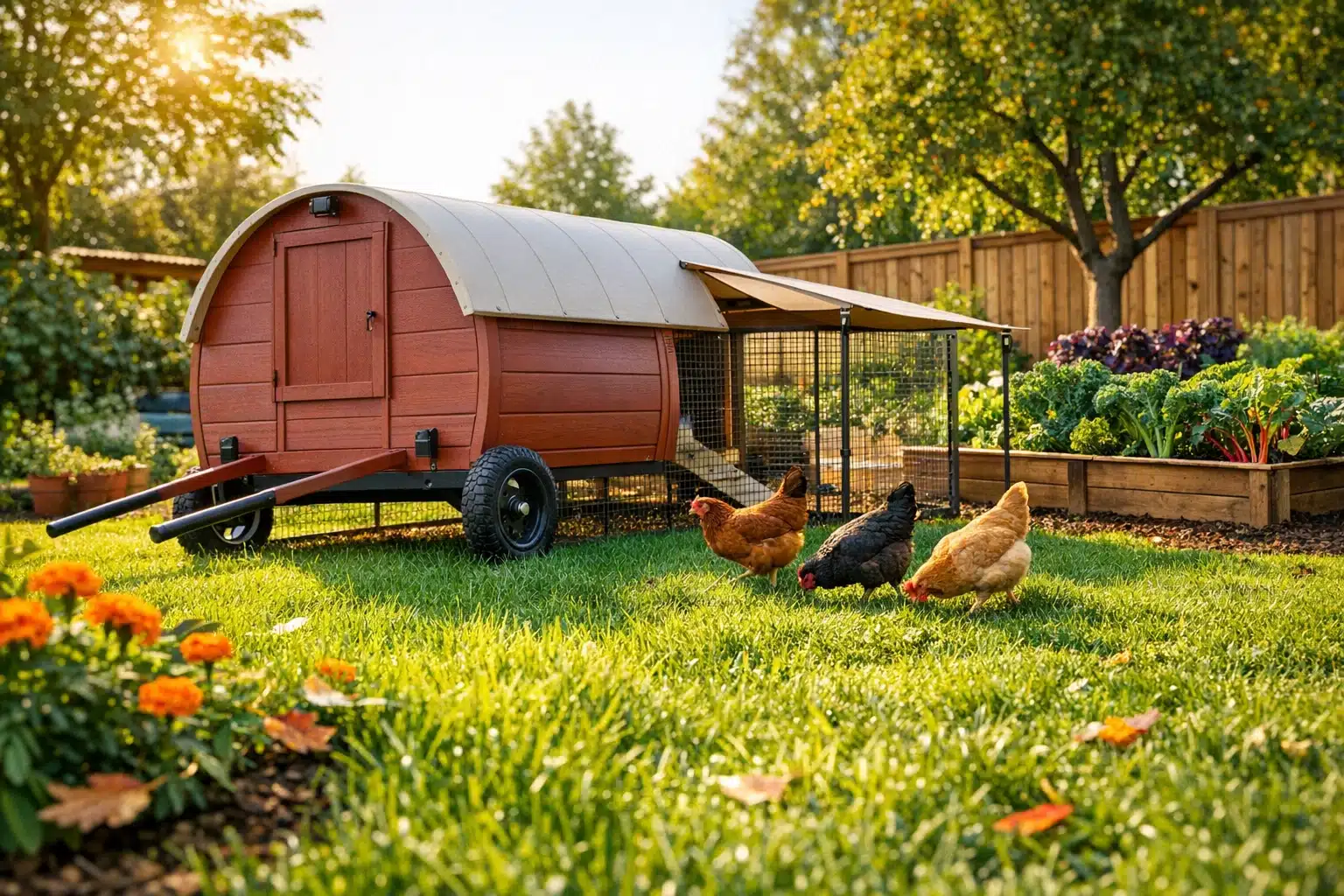
A mobile coop can be a brilliant solution when your yard is too small to dedicate one permanent patch to chickens year-round. Unlike a fixed structure, a chicken tractor or wheeled ark coop moves across the yard in stages, giving hens fresh ground while reducing wear on any single area. The appeal is easy to understand. One week the chickens are fertilizing a tired stretch of lawn, and the next week they are scratching through a different section, turning fallen leaves and insects into entertainment. In a compact yard, that movement can help prevent the familiar problems of odor, mud, and bare earth that build up around stationary runs.
Chicken tractors are usually lightweight, low-profile structures with an attached run. They work best for small flocks, especially if someone is home often enough to move them regularly. An ark-style design is common because curved roofs shed rain well and the shape feels less bulky in a suburban setting. Some owners prefer a hybrid system: a secure stationary coop for nighttime paired with portable run panels or a mobile grazing pen for daytime use. That arrangement combines stronger predator protection with the flexibility of rotation.
Still, mobility is not a magic trick. A poorly built portable coop can be awkward to pull, easy for predators to damage, and stressful for chickens during extreme weather. Small wheels may struggle on uneven ground, while flimsy frames can twist after a few wet seasons outdoors. Shade is also crucial. On a bright summer day, a movable coop without sufficient roof cover can heat up quickly, especially on paving stones or short grass. If your yard has little natural shade, a tractor may need a tarp extension or a separate shade cloth.
- Best for: households that want rotating grazing and can move the setup often.
- Less ideal for: owners who travel frequently or live in areas with heavy predator pressure.
- Useful features: sturdy handles, larger wheels, secure latches, and weatherproof roofing.
There is also the question of routine. A mobile setup asks more from the keeper in exchange for cleaner ground and more varied foraging. If daily movement sounds annoying now, it will not become charming in the middle of a rainy week. On the other hand, many people find the rhythm satisfying. Early in the morning, when the yard is quiet and the grass still holds a little silver sheen, shifting a tractor a few feet can feel less like a chore and more like part of the household’s daily pulse.
For small yards with patchy lawn, limited open soil, or changing seasonal use, mobile coops offer flexibility that fixed structures cannot match. They are especially attractive when you want chickens to contribute to the garden without permanently taking over one corner. The best mobile coop idea is sturdy enough to protect the flock, light enough to move without strain, and simple enough that the system remains practical long after the novelty wears off.
Beautiful and Multi-Use Small-Yard Coops: Designs That Blend with Gardens and Outdoor Living
One reason people hesitate to keep chickens in a small yard is visual clutter. A coop can seem like a purely functional object dropped into a space that already has enough jobs to do. Yet some of the best chicken coop ideas work because they act like part of the landscape rather than an interruption. When a coop echoes the materials, colors, and lines of a fence, shed, planter, or pergola, it feels intentional. That matters in tight neighborhoods where your yard is also your outdoor dining room, your container garden, or the patch of green your children use after school.
A popular strategy is the dual-purpose coop. For example, a raised coop can include storage space for feed bins, bedding, and hand tools in one weather-protected end, which keeps the surrounding yard cleaner. A run can be topped with a simple pergola frame that supports shade cloth in summer and string lights for evening use nearby. Decorative screening, such as horizontal slats or a trellis panel, can soften the look of wire while still allowing airflow. Some owners add planter boxes or a narrow shelf for herbs, although anything placed on the structure should not overload the roof or interfere with cleaning access.
Landscaping around the coop also makes a difference. Gravel paths reduce mud, stepping stones keep shoes cleaner, and sturdy shrubs can visually anchor the structure without trapping moisture against it. If odor is a concern, the design should prioritize dryness rather than perfumes or gimmicks. Chicken smell usually comes from wet bedding, manure buildup, and poor ventilation. In other words, a handsome coop only stays handsome if it is easy to clean and drains well.
- Choose exterior colors that match fences, trim, or existing garden structures.
- Use gravel or pavers in high-traffic zones to control mud and wear.
- Add screening or trellis elements where appearance matters most.
- Reserve enough open space around the coop for sweeping, raking, and repairs.
Another excellent idea for small yards is zoning. Instead of giving chickens one giant area, define a neat poultry corner with clear edges, storage, and pathways. That visual order makes the whole yard feel larger. A narrow run along one boundary can coexist with a seating area elsewhere, while supervised chicken time in the garden can happen only when needed. Some keepers even rotate birds through spent vegetable beds in the off-season, letting the hens scratch and clean up while protecting active growing spaces the rest of the year.
The beauty of a well-integrated coop is that it lowers friction. Neighbors are less likely to complain about what looks cared for. You are more likely to maintain a setup that feels pleasing to visit. And the yard keeps its personality instead of becoming a compromise zone. In a small space, that balance between function and appearance is not a luxury. It is often the difference between a coop you enjoy for years and one you outgrow emotionally in a single season.
Conclusion: How to Choose the Best Chicken Coop for Your Small Yard
The best chicken coop for a small yard is not a one-size-fits-all product. It is a thoughtful match between birds, space, budget, climate, and routine. If you are a first-time keeper with a suburban backyard, a raised fixed coop is often the safest starting point because it protects the flock well, uses vertical space, and simplifies egg collection and cleaning. If your yard needs to stay flexible and you enjoy hands-on daily care, a mobile coop or tractor may be more rewarding. If appearance matters as much as function, a narrow shed-style or well-screened corner coop can blend beautifully into a compact garden.
When comparing options, focus on the features that affect real life every day. Good ventilation, reliable predator-proofing, dry footing, easy clean-out access, and enough room per bird matter far more than cute details. A coop can have charming shutters and still fail if the roof leaks, the latches are weak, or the interior is too cramped for hens to roost comfortably. In small spaces, poor design reveals itself quickly. Mud spreads, smells linger, and chores become harder than they need to be.
- Choose a raised fixed coop if security and low-maintenance access are your top priorities.
- Choose a lean-to or corner design if your yard has awkward edges and limited width.
- Choose a mobile setup if you want rotational grazing and can commit to regular movement.
- Choose an integrated garden-style coop if visual harmony is essential in a shared outdoor space.
It also helps to think a season ahead. Summer heat, winter rain, feed storage, muddy shoes, and vacation care all shape whether a coop remains manageable. A slightly larger run, a better roof overhang, or a more accessible clean-out door can make a major difference over time. Spending wisely on durable wire, sound framing, and weather-resistant materials often saves more than cutting corners at the start.
For homeowners, renters with permission, and urban gardeners hoping to add hens without overwhelming the yard, the smartest approach is steady and practical. Keep the flock size modest, choose a design that respects your daily schedule, and build for easy maintenance from the beginning. Do that, and a small yard can hold more than a coop. It can hold a pleasant routine, healthier birds, and the quiet satisfaction of gathering fresh eggs from a space that still feels open, intentional, and entirely your own.