How to Build a Chicken Coop: A Step-by-Step Guide
A chicken coop is more than a small shed with feathers nearby; it is shelter, security, and the control room of a healthy backyard flock. When the coop is sized well and built with airflow, dry flooring, and predator resistance in mind, daily care becomes easier and birds stay more comfortable through heat, rain, and cold. This guide breaks the job into clear stages so first-time builders can avoid costly mistakes and create a practical home that works season after season.
Outline: 1. Plan the coop around flock size, climate, and local rules. 2. Choose a layout and gather durable, safe materials. 3. Build the base, floor, and frame so the structure starts square and strong. 4. Add walls, roof, ventilation, roosts, nest boxes, and an attached run. 5. Finish with predator-proofing, bedding, and a maintenance routine that keeps the coop useful for years.
1. Plan the Coop Before You Cut a Board
The most successful chicken coops are designed on paper before they are built in the yard. Planning sounds less exciting than holding a drill, but it is the step that decides whether your coop becomes a reliable little house or an awkward box that is too small, too dark, and strangely impossible to clean. Start by asking a few practical questions: How many chickens will you keep now, and how many might you add later? What is your climate like in summer and winter? Do local zoning rules, homeowner associations, or city ordinances limit flock size, coop placement, or setback distances?
Space matters more than many beginners expect. A common guideline is to provide about 3 to 4 square feet of indoor coop space per standard-size chicken, along with 8 to 10 square feet per bird in the run if they will not be free-ranging often. Bantams can use a little less, while larger breeds may benefit from more room. You should also plan for about 8 to 10 inches of roost space per hen and roughly 1 nesting box for every 3 to 4 laying hens. These numbers are not decorative trivia; they reduce crowding, pecking, stress, and damp conditions.
Location is the next big choice. Put the coop on high, well-drained ground if possible. A low spot that looks harmless in dry weather can turn into a muddy soup bowl after heavy rain. Morning sun helps dry dew and warm the coop early in the day, while afternoon shade can be valuable in hot climates. You also want easy access to water, feed storage, and a path you can walk in bad weather without feeling like an expedition leader crossing a swamp.
As you plan, write down key targets:
• Flock size now and in two years
• Indoor floor area and run size
• Door width for easy cleaning
• Vent placement high above roost level
• Budget for lumber, hardware cloth, roofing, and fasteners
A simple sketch with measurements is enough to begin. Mark doors, windows, nesting boxes, and the human access point for cleaning. Think about routine chores: collecting eggs, topping up feed, changing bedding, and inspecting for leaks. If those tasks feel easy on paper, they are more likely to feel easy on a cold morning when the wind is sharp and the coffee has not kicked in yet. Good planning does not remove all effort, but it replaces guesswork with confidence, and that is the best foundation any coop can have.
2. Choose a Practical Design and the Right Materials
Once the plan is clear, the next step is choosing a design that fits your birds, your yard, and your budget. There is no single perfect chicken coop, only the best match for your situation. A small raised coop works well in wet areas because it keeps the floor dry and gives chickens shade underneath. A walk-in coop costs more in materials, but many keepers find the extra height worth it because cleaning, inspecting, and refilling feeders is far easier when you are not crouching like a plumber under a sink. A movable chicken tractor can be excellent for a few birds on fresh grass, while a stationary coop with an attached run is usually more practical for a permanent backyard flock.
Wood is the most common building material because it is easy to cut, repair, and modify. Pressure-treated lumber is often used for the base where wood is near the ground, but for interior surfaces that birds may peck frequently, many builders prefer untreated lumber covered or sealed appropriately after construction. Exterior-grade plywood, standard framing lumber, and weather-resistant screws are a dependable starting set. Reclaimed materials can lower costs, but they should be checked carefully for rot, protruding nails, old paint of unknown composition, and warped boards that will make squaring the frame harder.
The biggest material decision for safety is not the siding or the trim; it is the wire. Chicken wire is useful for keeping chickens contained, but it is not strong enough to stop determined predators. Raccoons, dogs, foxes, and even some rats can tear, bend, or reach through weak mesh. For openings, windows, and runs, galvanized hardware cloth with openings around 1/2 inch is widely recommended because it is sturdier and better at blocking small intruders. It costs more upfront, but it often saves birds and repair work later.
Other smart material choices include:
• Corrugated metal or asphalt shingles for a durable roof
• Exterior screws instead of nails for stronger, easier repairs
• Heavy-duty hinges and predator-resistant latches
• Roofing felt or underlayment in rainy climates
• Non-slip flooring surfaces that are simple to sweep
Ventilation should influence design from the beginning, not be added as an afterthought. Chickens produce moisture overnight through breathing and droppings, and stale humid air leads to condensation, odor, and respiratory stress. Good coops move air above the birds without creating a direct draft where they sleep. Picture the structure as a tiny weather machine: dry air in, damp air out, heat managed, rain blocked. If the design can do those jobs while still allowing you to reach every corner with a rake or brush, you are choosing wisely.
3. Build the Foundation, Floor, and Frame Step by Step
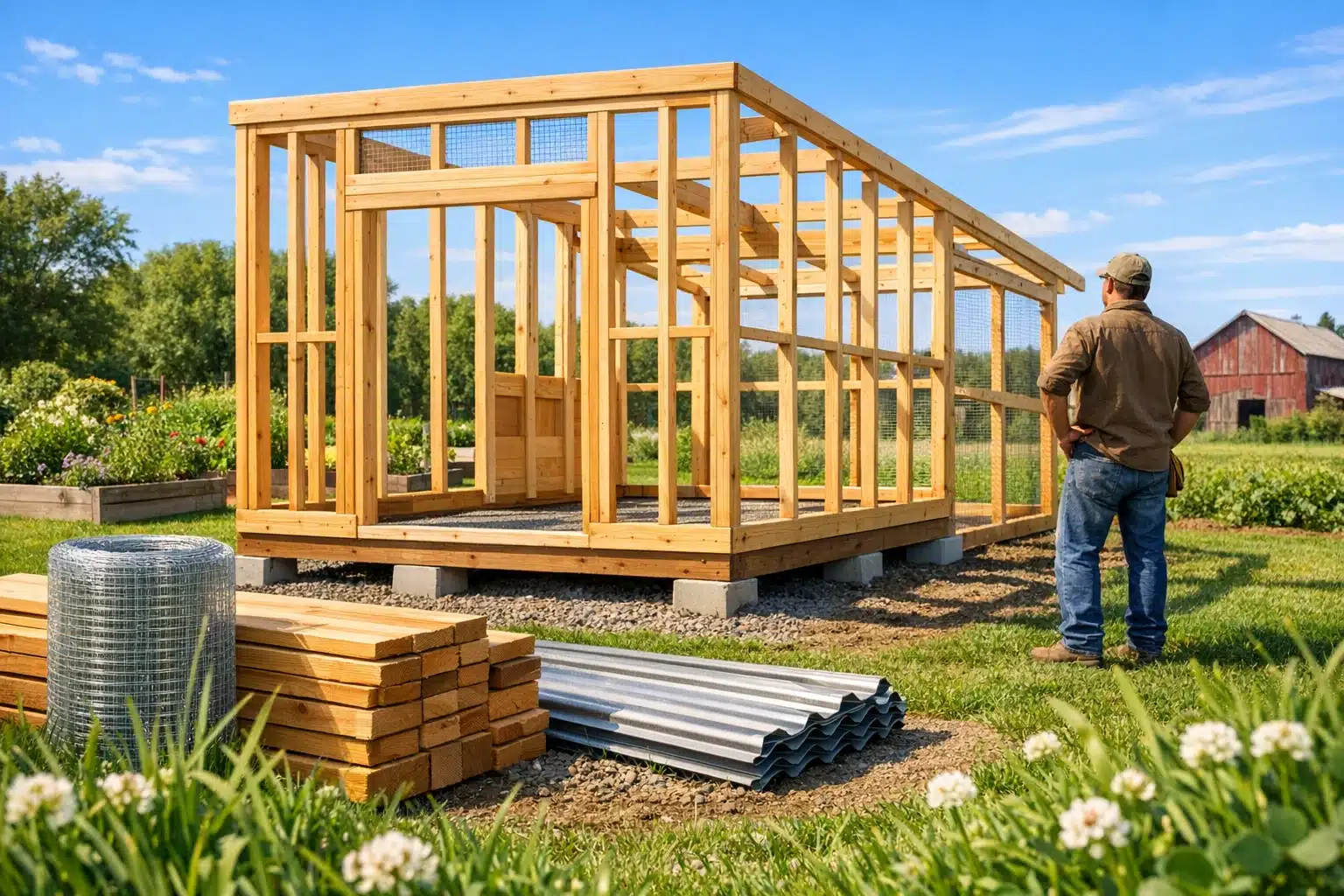
With the design settled and materials on hand, construction starts at ground level. This is where patience matters. A coop can look charming and rustic when it is finished, but the bones of the structure should be level, square, and solid. Begin by marking the footprint with stakes and string. Measure the diagonals of the rectangle; if they match, the layout is square. Clear vegetation, scrape away loose topsoil if needed, and create a stable base. For a small coop, builders often use concrete deck blocks, compacted gravel, skids, or pavers. In wet climates, raising the coop several inches or more above ground helps reduce rot and moisture problems.
If you are using a wooden floor frame, common lumber sizes such as 2×4 or 2×6 make a practical base. Build the rectangle first, check for square, and fasten the joints securely with exterior screws or structural fasteners. Floor joists can then be added at regular intervals for strength, especially if the coop will support people walking inside. After that, attach the floor sheathing, typically exterior-grade plywood. Some keepers protect the floor with a sheet of vinyl or several coats of livestock-safe sealant after construction, which makes cleaning easier and helps prevent moisture from soaking into the wood.
Wall framing follows the same basic logic as a shed. Build each wall flat on the ground if space allows, including openings for doors and windows, then stand them up one at a time. Clamp or brace them temporarily until all walls are connected. At this stage, it helps to work slowly and recheck measurements rather than assume everything will line up by goodwill alone. The coop may be small, but small buildings still punish rushed work. A crooked wall today becomes a roof problem tomorrow.
A straightforward order of work looks like this:
• Level the site and set the foundation points
• Assemble the floor frame and attach the subfloor
• Frame the front, back, and side walls
• Add temporary bracing to keep walls plumb
• Install top plates and roof supports
Include a people-sized cleaning door if your coop is large enough, or at least a wide access hatch if it is compact. Tiny doors save a little lumber and cause endless irritation later. Also frame openings for nesting box access and ventilation while the walls are easy to handle. By the time the frame is standing firmly on its base, the project begins to feel real. What was a stack of boards becomes a shape with purpose, and you can finally see the outline of the flock’s future home taking form in the yard.
4. Add Walls, Roof, Ventilation, Roosts, Nest Boxes, and the Run
After the frame is up, the coop starts moving from structure to habitat. Attach the wall sheathing and install the roof decking, then add your roofing material according to the manufacturer’s instructions. A sloped roof is important because standing water shortens the life of the building. Even a simple single-slope roof can work very well for a backyard coop, especially if it directs rain away from the door and run entrance. In snowy regions, roof pitch matters even more because shedding snow reduces weight and moisture problems.
Ventilation deserves careful attention. Chickens tolerate cold better than damp, stagnant air. The goal is to place vents high enough that warm, moist air can escape without blowing directly across the birds while they roost. Covered ridge vents, soffit-style openings, or screened upper wall vents can all work. Every opening should be backed with hardware cloth, not flimsy mesh. Windows are useful too, both for light and for summer airflow, but they should close securely in storms and during very cold weather if needed.
Inside the coop, roosts and nesting boxes need correct placement. Roost bars are usually more comfortable when made from smooth 2×4 boards with the wide side up, allowing birds to sit with their feet flatter in cold weather. Set roosts higher than nesting boxes so hens are more likely to sleep on the roost rather than in the nests. Nest boxes should be placed in a slightly dimmer area and filled with clean bedding. One box for every 3 to 4 hens is a common rule, though many hens will insist on sharing their favorite box anyway, as if the others were built merely for decoration.
For the run, predator-proofing is non-negotiable. Use hardware cloth around the sides and consider either burying it 12 to 18 inches deep or laying an outward-facing apron 18 to 24 inches along the ground to discourage digging predators. Secure the run frame well and use latches that raccoons cannot easily manipulate. Simple hook latches are often not enough. If hawks or climbing predators are common, cover the top of the run too.
Useful interior and exterior checkpoints include:
• Dry nesting area with easy egg access
• Stable roost bars with enough space per bird
• High ventilation openings protected by hardware cloth
• Water and feeder placement that avoids contamination
• Run fencing secured at every edge and corner
At this stage, your coop should feel balanced: weather-tight but not stuffy, secure but not cramped, simple but not flimsy. When all these elements work together, the building stops being just a project and becomes a system that supports healthier birds and easier routines.
5. Finishing Touches, Maintenance, and Conclusion for Backyard Keepers
The final stage is where comfort, durability, and daily usability come together. Seal exterior wood with paint, stain, or another weather-appropriate finish once the structure is fully dry and ready. This is not just for looks. A good finish slows moisture damage, reduces warping, and helps your coop survive years of sun and rain. Inside, avoid heavily scented products and let any coatings cure completely before birds move in. Install secure latches on every access point, including nest box lids and feed storage. If a hinge feels a little loose now, it will feel much looser after a season of use, wind, and repeated opening.
Set up the coop with absorbent bedding such as pine shavings or chopped straw, and decide early whether you want a standard cleaning routine or a deep-litter system. Standard cleaning means removing soiled bedding regularly, which keeps management straightforward. Deep litter involves building up carbon-rich bedding over time and stirring it so it stays drier and composts gradually, though it still requires monitoring and is not suitable for every climate or management style. Whichever method you choose, the golden rule is simple: if the coop smells strongly of ammonia or feels damp, something needs attention.
Budget also deserves an honest look. A basic small DIY coop can cost a few hundred dollars, while a larger walk-in design with quality roofing, hardware cloth, and predator-resistant hardware may climb much higher. Spending wisely matters more than spending lavishly. It is often better to invest in strong wire, a dry roof, and solid framing than in decorative trim. Chickens do not care whether the coop looks like a miniature cottage from a magazine. They care whether it is dry, safe, shaded, and easy to roost in.
Before adding birds, run a final inspection:
• Open and close every door and hatch
• Check for sharp edges, exposed screws, and gaps
• Test latches at night and in bad weather
• Confirm water will not drain into the coop or run
• Stand inside and look for dark, stale, or awkward corners
For beginners, the biggest lesson is that a good chicken coop supports your habits as much as it shelters your flock. If it is easy to clean, easy to lock, and easy to inspect, you are far more likely to maintain it well. That consistency protects bird health, reduces stress, and makes keeping chickens more enjoyable. So if you are building your first coop, aim for practical strength over fancy complexity. A square frame, dry floor, breathable air, and strong predator protection will serve you better than any trendy shortcut. Build carefully, and your hens will reward that effort with calmer routines, cleaner eggs, and a backyard that feels just a little more alive every morning.