How to Remove Hard Water Stains from a Toilet
A toilet can be freshly scrubbed and still look dirty when hard water leaves behind a chalky ring, rusty streaks, or crusty mineral scale. Those marks are common in homes with mineral-rich water, and they often survive a quick swipe with a standard brush. The good news is that most stains can be lifted with the right method, a little patience, and a cleaner chosen for the level of buildup rather than guesswork. This guide shows how to do that safely and efficiently.
1. Outline and Basics: Why Hard Water Stains Form in the First Place
Before you reach for a cleaner, it helps to know what you are fighting. Hard water stains are not ordinary dirt. They form when water containing dissolved minerals, mainly calcium and magnesium, evaporates and leaves a residue behind. In some homes, iron is also present, which can create orange, tan, or reddish-brown streaks. What looks like a random toilet ring is often a slow record of every flush, every refill, and every drop left to dry on porcelain.
This article follows a simple path so the job feels manageable instead of annoying. The outline is straightforward:
• First, identify what kind of stain you have and why it matters.
• Next, choose the safest tools and cleaners for porcelain.
• Then, use a method that matches light, moderate, or heavy buildup.
• Finally, build a prevention routine so you are not starting over next week.
Water hardness is commonly measured in milligrams per liter, or parts per million. Many water references classify water above about 120 mg/L as hard and above 180 mg/L as very hard. In practical terms, that means your toilet may collect mineral deposits faster, especially around the waterline, under the rim, and near the siphon jet openings. A regular toilet cleaner may remove surface grime while leaving the mineral layer in place, which is why the bowl still looks dull or stained afterward.
It is also useful to distinguish among common stain types. A white or gray crust usually points to limescale. A brown or rust-colored mark may suggest iron in the water. A dark ring can be a mix of mineral residue, bacteria, and trapped grime. That distinction matters because a mild acidic cleaner such as white vinegar or citric acid can soften mineral deposits, while plain soap or a general bathroom spray often cannot do much beyond surface cleaning.
Think of the stain as a tiny layer of stone clinging to the bowl. Once you see it that way, the strategy becomes clearer: dissolve what can be dissolved, loosen what can be loosened, and scrub only with materials that will not scratch the finish. That balance is the key to cleaning effectively without turning a toilet repair into a toilet replacement.
2. Tools, Cleaners, and Safety: What Works and What to Avoid
A good result depends as much on the right tools as on elbow grease. Many people start with the first bottle under the sink, but that can waste time or even damage the bowl if the cleaner is too harsh or paired with the wrong scrubber. Porcelain is durable, yet its glazed surface can be dulled or scratched by abrasive tools, and once that finish is damaged, stains tend to return even faster.
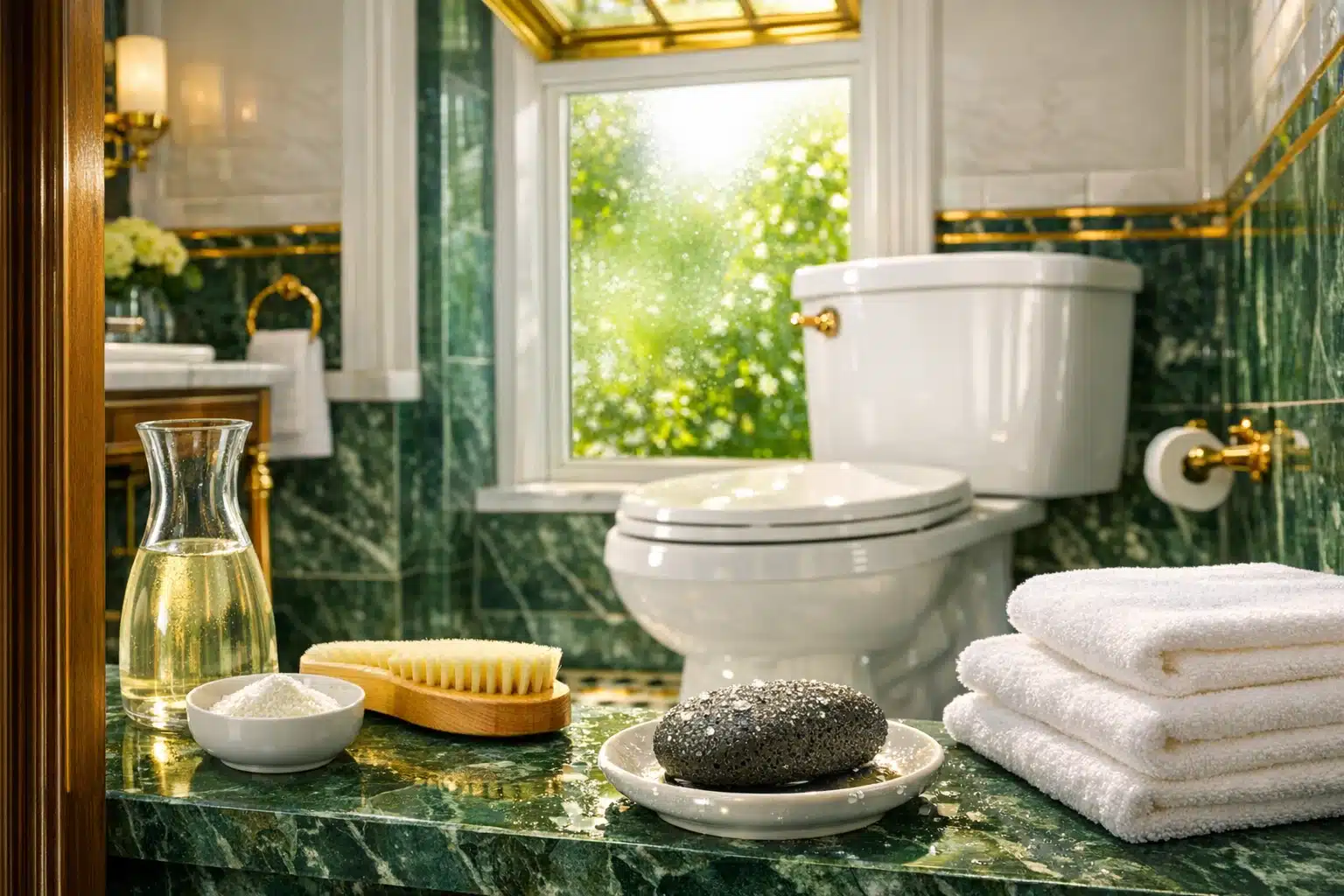
For most toilets, a smart cleaning kit includes:
• Rubber gloves
• A toilet brush with sturdy bristles
• White vinegar or citric acid
• A spray bottle or small container for applying liquid
• A pumice stone made for toilet cleaning, if buildup is severe
• Paper towels or a cloth for drips and detail work
• Optional: a commercial limescale remover labeled safe for toilets
White vinegar is the classic first choice because it is accessible, inexpensive, and mildly acidic. It works well on fresh or moderate mineral staining, especially if allowed to sit for at least 30 minutes. Citric acid is often a little stronger and can be very effective when dissolved in warm water. Commercial descalers may work faster on thick deposits, but they should be used carefully and exactly as directed, since some formulas are significantly stronger than pantry-based options.
Baking soda is often mentioned in cleaning guides, and it can help add gentle scrubbing action or reduce odor, but it is not the main stain remover in hard water cases. The acid does the real work on mineral deposits. Baking soda is better thought of as a supporting actor, not the star of the scene.
What should you avoid? Steel wool is a bad idea on porcelain. Sharp metal tools can chip or scratch the glaze. Mixing cleaners is also risky, especially bleach with acidic products like vinegar or limescale remover. That combination can release dangerous fumes. If you want to use bleach for disinfecting on another day, keep it separate from acid-based descaling sessions. Good ventilation matters too, especially in small bathrooms.
For severe buildup, a toilet-safe pumice stone can be remarkably effective, but technique matters. It must stay wet, and the bowl surface must stay wet, or you increase the chance of scratching. Used gently, it can shave off stubborn scale that brushing alone cannot move. Used carelessly, it can leave marks. The best approach is to start mild, move up only when needed, and let chemistry do as much of the heavy lifting as possible.
3. Step-by-Step Removal for Light to Moderate Hard Water Stains
If the stain is visible but not heavily crusted, start with a simple acid soak. This method is affordable, low-drama, and often enough to restore the bowl without resorting to stronger products. It works best when the deposits are still relatively thin and have not built into a rough, stone-like ridge.
Begin by reducing the water level in the bowl. You do not need to disconnect anything complicated. Just turn off the water supply valve if you want, flush once, and use a toilet brush to push some remaining water down the trap. Lowering the water level exposes more of the stained area so the cleaner can sit directly on the deposit rather than dilute into the bowl water.
Now apply your cleaner. One reliable method is to pour 1 to 2 cups of white vinegar into the bowl, focusing on the ring and under the rim. If the stains climb above the waterline, soak paper towels in vinegar and press them against those areas so the acid stays in contact with the mineral layer. Let it sit for 30 to 60 minutes. If the stain has been there for months, an overnight soak can make a visible difference.
After the wait, scrub with a toilet brush. If needed, add a little baking soda for mild abrasion, but do not expect it to dissolve the scale by itself. Flush and inspect. Often the first round removes the outer layer, and a second treatment clears what remains. If vinegar seems too mild, try citric acid. Dissolve a few tablespoons in warm water, pour it onto the stain, and let it sit before scrubbing. Many people find citric acid especially useful for white crust and cloudy mineral film.
For under-rim stains, use the brush to work cleaner into the hidden channels. Mineral buildup there can affect water flow, which means a toilet may flush less efficiently over time. If you notice uneven flushing or weak rim jets, this detail is worth your attention.
A few practical reminders help the process go smoothly:
• Give the cleaner time to work instead of scrubbing immediately
• Repeat the soak before escalating to something harsher
• Rinse well between different products
• Stay patient, because mineral deposits often release in layers rather than all at once
This stage is where most homeowners can solve the problem. The change may not be instant and dramatic like a television commercial, but it is usually steady and real. A stain that seemed permanent often begins to fade once the minerals are softened and the bowl is treated with a method that fits the chemistry of the problem.
4. How to Remove Severe Rings, Thick Scale, and Rusty Mineral Buildup
Some stains are not impressed by vinegar alone. If the toilet has a heavy brown ring, gritty scale, or crusty deposits that feel raised to the touch, you are dealing with advanced buildup. At this point, the job shifts from simple cleaning to careful removal. The goal is still the same, but the method becomes more deliberate.
Start by softening the deposit with an acid-based soak. You can use a stronger citric acid solution or a commercial descaler that is labeled safe for toilet bowls. Follow the product instructions closely, especially for dwell time. More is not always better. Letting a product sit longer than recommended can damage metal parts or create unnecessary fumes in an enclosed bathroom. Ventilation and gloves are essential here.
Once the buildup is softened, a wet pumice stone can help remove what brushing leaves behind. This is the point where many people get nervous, and that is understandable. The trick is simple: soak the stone, keep the porcelain wet, test on a small area, and use light pressure. You are not trying to gouge the bowl; you are gently abrading the mineral crust. Done correctly, the stone wears away the deposit rather than the toilet finish. Done aggressively, it can leave scratches, so slow and steady wins this round.
Rust-colored staining deserves special mention. If your water contains iron, the bowl may develop orange, red-brown, or tea-colored streaks. These often respond better to products formulated for rust and mineral removal than to baking soda-based cleaning routines. The difference is not cosmetic marketing; it is chemistry. Iron staining can cling differently than standard calcium scale, so the right formula matters.
Here is a sensible escalation order for severe stains:
• Acid soak first to loosen the deposit
• Brush and flush to remove what lifts easily
• Reapply cleaner if needed
• Use a wet pumice stone on remaining thick scale
• Finish with a full rinse and a final brush
If you repeat this process and the bowl still looks rough or stained, inspect the surface closely. In older toilets, the glaze may be worn, etched, or permanently discolored. At that stage, the issue may be less about removable residue and more about surface damage. A new toilet is not the first answer, but sometimes it becomes the practical one after years of mineral exposure.
The encouraging part is that even ugly buildup usually improves significantly. A toilet that looked beyond saving can often be restored to a clean, bright finish with a combination of soaking, safe abrasion, and patience. It is not glamorous work, but it is satisfying in the deeply domestic way that only a revived bathroom fixture can be.
5. Preventing Future Stains and Final Advice for a Cleaner Bathroom
Removing hard water stains is only half the story. The real victory is keeping them from returning so quickly. In a home with hard water, prevention matters because every day the toilet refills with fresh minerals. If you ignore that cycle, even a beautifully cleaned bowl can begin rebuilding its ring like a tiny geology project.
The easiest strategy is consistency. A light weekly cleaning usually beats an exhausting deep scrub every few months. Using vinegar or a toilet cleaner designed for mineral control once a week can interrupt buildup before it hardens. Pay extra attention to the waterline and under the rim, where deposits tend to start quietly and gather strength over time.
A simple routine can look like this:
• Brush the bowl once or twice a week
• Apply a mild acidic cleaner regularly instead of waiting for a thick ring
• Wipe drips and splashes around the base and outer bowl so minerals do not dry there
• Check under the rim once a month for hidden buildup
• Treat early discoloration right away before it becomes scale
If your household deals with very hard water, test strips can help confirm what you are up against. In many cases, a whole-house water softener or point-of-entry treatment can reduce mineral accumulation across sinks, showers, and toilets. That is a larger investment, so it is not necessary for everyone, but in homes where scale appears everywhere, it can reduce cleaning time and protect plumbing fixtures over the long term.
There are also smaller habits that help. Fix slow leaks or running toilets, because constant water movement can create more mineral trails. Avoid harsh scratching tools that damage the glaze and make future stains easier to grab onto. Choose cleaners for the kind of deposit you actually have instead of using the same product for every bathroom problem.
For homeowners, renters, and anyone tired of that stubborn ring staring back after a flush, the main takeaway is reassuring: hard water stains are common, stubborn, and usually manageable. Start with the least aggressive method, step up only when needed, and build a routine that keeps minerals from settling in for the long stay. A cleaner toilet is not just about appearance. It makes the whole bathroom feel fresher, better maintained, and easier to care for day after day.