How to Stop Centipedes in the Basement
If you keep spotting fast, many-legged shadows racing across the basement floor, you are not imagining a bigger problem than exists, but you are seeing a clear signal about conditions below your home. Centipedes thrive where moisture, shelter, and smaller insects collect, which makes basements an almost perfect hiding place. The good news is that lasting control usually comes from fixing the environment, not from chasing individual pests with a shoe. Once you know what attracts them, you can make the space drier, cleaner, and far less inviting.
Outline
- Why centipedes are drawn to basements and what their presence usually means
- How moisture control changes the basement from ideal habitat to poor shelter
- How to block entry points and remove hiding places
- How to cut off their food supply and monitor activity effectively
- How to build a practical action plan and decide when professional help makes sense
1. Why Centipedes Show Up in the Basement
Before you can stop centipedes, it helps to understand what they are looking for. In most homes, the species people notice is the house centipede, a fast-moving predator that feeds on other small pests. That detail matters. Centipedes are not usually drawn to your basement because they want wood, fabric, paper, or pantry food. They are there because the space offers three things they like: moisture, cover, and prey. In a way, they act like tiny inspectors with far too many legs, revealing that your basement may be damp and quietly hosting other insects.
Basements create ideal conditions because they are naturally cooler, darker, and more humid than the rooms above. Concrete walls can hold moisture, small leaks often go unnoticed, and storage areas create dozens of quiet hiding spots. Cardboard boxes, stacked lumber, laundry piles, old rugs, and cluttered corners all give centipedes a place to rest during the day. At night, they roam along walls, behind appliances, near floor drains, and around sump pits searching for silverfish, spiders, ants, roaches, springtails, and other small insects.
It is also useful to know what centipedes are not. They are not like termites that damage the structure of a house, and they are not like bed bugs that live on a human host. Most do not build large colonies indoors. If you see one or two, that may simply mean conditions are favorable. If you see them often, especially in different parts of the basement, it usually suggests a broader moisture or insect issue rather than a dramatic “centipede infestation” by itself.
A quick comparison makes the point clearer:
- Centipedes are predators, so their presence often signals that other bugs are already established.
- Millipedes are scavengers and are more strongly tied to decaying organic matter outdoors.
- Silverfish and springtails are strongly linked to humidity and can become a steady food source indoors.
Entry is usually easy for them. They can slip through tiny foundation cracks, gaps around pipes, poorly sealed basement windows, door thresholds, and spaces where utility lines enter the home. Once inside, they do not need much to stay. A basement with 60 percent or higher humidity, a few unnoticed insects, and plenty of clutter can feel to a centipede like a private resort with room service.
The key takeaway is simple: killing the ones you see may bring brief satisfaction, but the real solution is environmental control. If you reduce dampness, remove shelter, and cut insect activity, the basement stops functioning like a habitat and starts becoming just another room.
2. Control Moisture First, Because Dry Basements Are Harder for Centipedes to Use
If there is one step that does the most heavy lifting, it is moisture control. Centipedes lose water through their bodies more easily than many people realize, so damp air and wet surfaces help them survive. Their prey also likes moisture. That means a humid basement supports both the hunter and the menu. When homeowners say they have tried traps or sprays without much success, the missing piece is often that the basement still feels like a cave after rain, laundry day, or a humid week in summer.
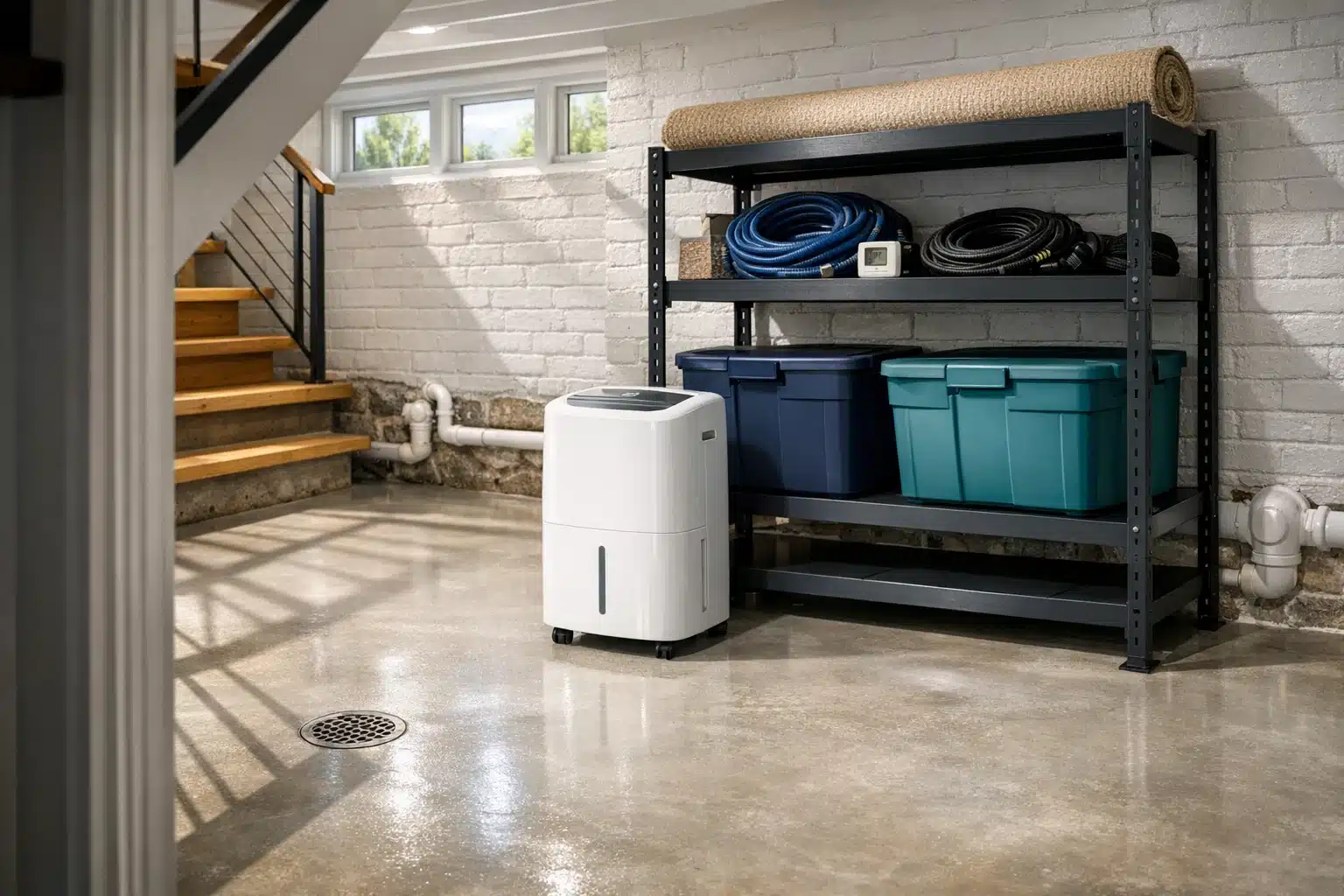
A good target for many basements is to keep relative humidity below 50 percent. A simple digital hygrometer is inexpensive and gives you a real number instead of a guess. If humidity is regularly above that level, a dehumidifier can make a major difference. Choose a unit sized for the space, empty it consistently or connect it to a drain, and clean the filter so it keeps working efficiently. In finished basements, running the unit during the dampest months can also protect stored items, reduce musty odors, and make the room more comfortable overall.
Still, a dehumidifier is only part of the story. You also need to stop water from getting in or lingering where it should not. Check the basement with a practical eye:
- Look for plumbing leaks under sinks, near water heaters, and around washing machine connections.
- Inspect the sump pit and pump for standing water or poor discharge.
- Make sure gutters and downspouts move rainwater away from the foundation.
- Confirm the soil around the home slopes away rather than toward the walls.
- Watch for condensation on pipes, which can drip steadily and keep surfaces damp.
Comparing short-term and long-term fixes is helpful here. A towel on the floor after a leak is a short-term response. Repairing the pipe, insulating the sweating line, or redirecting exterior drainage is a long-term correction. One dries a puddle; the other changes the environment. Centipede control becomes far more reliable when you aim for the second type of fix.
Storage habits also affect humidity. Cardboard absorbs moisture, fabric piles trap it, and packed corners limit airflow. If you can raise storage off the floor and switch to sealed plastic bins, the basement becomes easier to inspect and less comfortable for pests. Fans can help in some cases, but they work best when paired with actual moisture reduction rather than used as a substitute.
Think of it this way: a dry basement is not just less appealing to centipedes. It is less inviting to the entire chain of small insects they feed on. Once the air is drier and surfaces stay clean and dry after storms, the problem often starts shrinking on its own.
3. Seal Entry Points and Remove Hiding Places
After moisture control, the next step is to make the basement physically harder to enter and less comfortable to occupy. Centipedes do not need a dramatic opening. A narrow crack in the foundation, a rough gap around a pipe, or a basement door with a worn sweep can be enough. Homes settle, concrete develops hairline fractures, and utility penetrations are not always sealed tightly. What looks minor to a homeowner can function like an open gate to crawling pests.
Start with a slow inspection, ideally with a flashlight and notepad. Focus on wall-floor joints, foundation cracks, expansion joints, spaces around water lines and electrical conduits, basement windows, and the threshold of any exterior basement door. Seal small cracks with an appropriate masonry caulk or sealant. For gaps around pipes, use materials suited to the opening and the surface. In some places, copper mesh or steel wool combined with sealant works better than foam alone because it is less likely to be pushed aside by pests or degrade quickly. If a window frame is loose or weatherstripping is worn, replacing those parts can help more than repeated spot treatments.
Now turn to clutter, because clutter is often the quiet accomplice. A basement packed with boxes and forgotten items gives centipedes shaded lanes, cool pockets of air, and a buffet of insect prey living undisturbed nearby. The goal is not to create a showroom. It is to remove the kind of disorder that helps pests remain invisible.
These changes usually produce the biggest improvement:
- Replace cardboard boxes with sealed plastic bins.
- Keep stored items a few inches off the floor and slightly away from walls.
- Reduce piles of paper, fabric, and old lumber.
- Vacuum corners, baseboards, and behind appliances regularly.
- Open up crowded utility areas so inspections are easier.
There is a useful comparison here between “hidden storage” and “managed storage.” Hidden storage means stacks pushed into dark corners, where you only discover a problem after it has grown. Managed storage means labeled bins, clear aisles, and visible walls. One creates habitat; the other creates control.
Outdoor conditions also matter because many centipedes begin near the foundation and then move inward. If mulch is piled high against the house, firewood sits directly beside the wall, or dense plant growth holds moisture near basement windows, the exterior becomes a staging area. Pulling mulch back slightly, relocating woodpiles, and trimming vegetation improves airflow and reduces harborage near the structure.
Sealing and decluttering may not feel as dramatic as using a pesticide, but they address the physical conditions that allow centipedes to keep showing up. A basement with fewer cracks, fewer hiding zones, and better-organized storage gives pests fewer routes in and far fewer reasons to stay.
4. Remove the Food Supply and Use Monitoring Tools Wisely
Centipedes are predators, so one of the smartest ways to reduce them is to reduce what they eat. If you only focus on the centipedes you see, you may miss the deeper issue: the basement is supporting other insects well enough to feed them. In many homes, those hidden food sources include silverfish, spiders, ants, small roaches, drain flies, sowbugs, springtails, and occasional invaders that slip in through foundation gaps. When the prey population drops, centipedes have far less reason to patrol the space.
Begin with sanitation and inspection. Vacuum along wall edges, behind laundry machines, around stored items, and near utility penetrations. Dust, lint, shed skin from insects, and organic debris may seem harmless, but they can support small pests. Clean floor drains and check whether drains are drying out, developing slime, or attracting moisture-loving insects. If you store pet food or bird seed in the basement, keep it in sealed containers. Also look for spider webs in corners, under shelves, or near windows; webs can indicate a steady insect presence.
Monitoring tools are especially useful because they help you measure progress rather than rely on memory. Sticky traps placed along walls, behind appliances, near doorways, and in damp corners can show where activity is highest. They work well because both centipedes and many of their prey tend to travel along edges. Label the traps with dates and locations, then check them weekly. If trap catches decline after you lower humidity and clean up clutter, you have evidence that the plan is working.
Here is how common control tools compare:
- Sticky traps are low-risk, affordable, and excellent for monitoring trends.
- Vacuuming and cleaning remove insects, egg cases, webs, and debris without chemical exposure.
- Residual insecticides can help in cracks and crevices, but they work best after moisture and clutter are addressed.
- Broadcast spraying large open areas often gives disappointing results if the environment remains damp and prey insects remain active.
If you choose to use an insecticide, read the label carefully and use only products approved for the location and target pests. Treatments are usually more effective in entry points, voids, or problem crevices than across every surface in the basement. Overusing chemicals is not a shortcut. It can waste money, create unnecessary exposure, and still leave the root conditions untouched.
The most effective mindset is to think like an ecosystem manager rather than a bug chaser. Lower the humidity, reduce prey, remove webs, monitor traffic, and fix the spots where activity concentrates. When the basement no longer supplies food, centipedes begin to lose interest fast.
5. Build a Long-Term Plan and Know When to Call a Professional
Stopping centipedes for good usually comes down to consistency. A basement can improve dramatically in a weekend, but long-term control comes from a simple routine that keeps moisture low, storage organized, and new pest activity visible before it grows. The most successful homeowners are rarely the ones who use the strongest product. They are the ones who follow a clear plan and make the space boring for pests month after month.
A practical action plan can look like this:
- Week 1: Measure humidity, inspect for leaks, place sticky traps, and remove obvious clutter.
- Week 2: Seal cracks and pipe gaps, improve drainage outside, and switch cardboard storage to plastic bins where possible.
- Week 3: Deep-clean edges, drains, and utility zones, then review trap counts.
- Week 4 and beyond: Maintain humidity below target, recheck vulnerable areas after heavy rain, and inspect traps monthly.
This kind of schedule does two important things. First, it breaks the job into manageable steps. Second, it lets you see whether the problem is improving or staying flat. If you used ten traps and caught several centipedes the first week but only one or two after a month of moisture control and cleanup, you are moving in the right direction. If activity stays high, the basement may have hidden structural moisture, larger prey populations, or unsealed access points that need closer attention.
There are times when calling a pest control professional or basement waterproofing specialist makes sense. Consider expert help if you notice repeated water intrusion, heavy insect activity despite cleanup, musty odors that suggest chronic dampness, cracks that appear to widen, or centipedes showing up on multiple floors of the home. A professional can identify hidden entry routes, evaluate whether another pest is driving the problem, and recommend treatments that fit the structure.
It is also worth comparing DIY and professional approaches honestly. DIY methods are often effective when the issue is moderate and the homeowner can address moisture, storage, and sealing. Professional help becomes more valuable when the cause is harder to find, such as drainage failures, concealed leaks, wall void activity, or a broader pest problem. In other words, DIY is great for control; specialists are helpful when diagnosis becomes the real challenge.
Seasonal attention helps too. Spring rains, summer humidity, and autumn temperature changes can all push more pests toward basements. A quick inspection every season can prevent a small return from becoming a familiar pattern. The goal is not perfection. It is a basement that stays dry, easy to inspect, and unappealing to the insects centipedes depend on.
Conclusion for Homeowners
If you want fewer centipedes in the basement, focus less on the individual pests and more on the conditions supporting them. Dry air, repaired leaks, sealed gaps, organized storage, and reduced insect prey are the combination that produces lasting results. Most homes improve significantly when humidity drops below 50 percent and cluttered corners stop functioning as hiding zones. For homeowners, that means the smartest strategy is also the most practical: make the basement cleaner, drier, and easier to inspect, and centipedes usually lose their advantage.