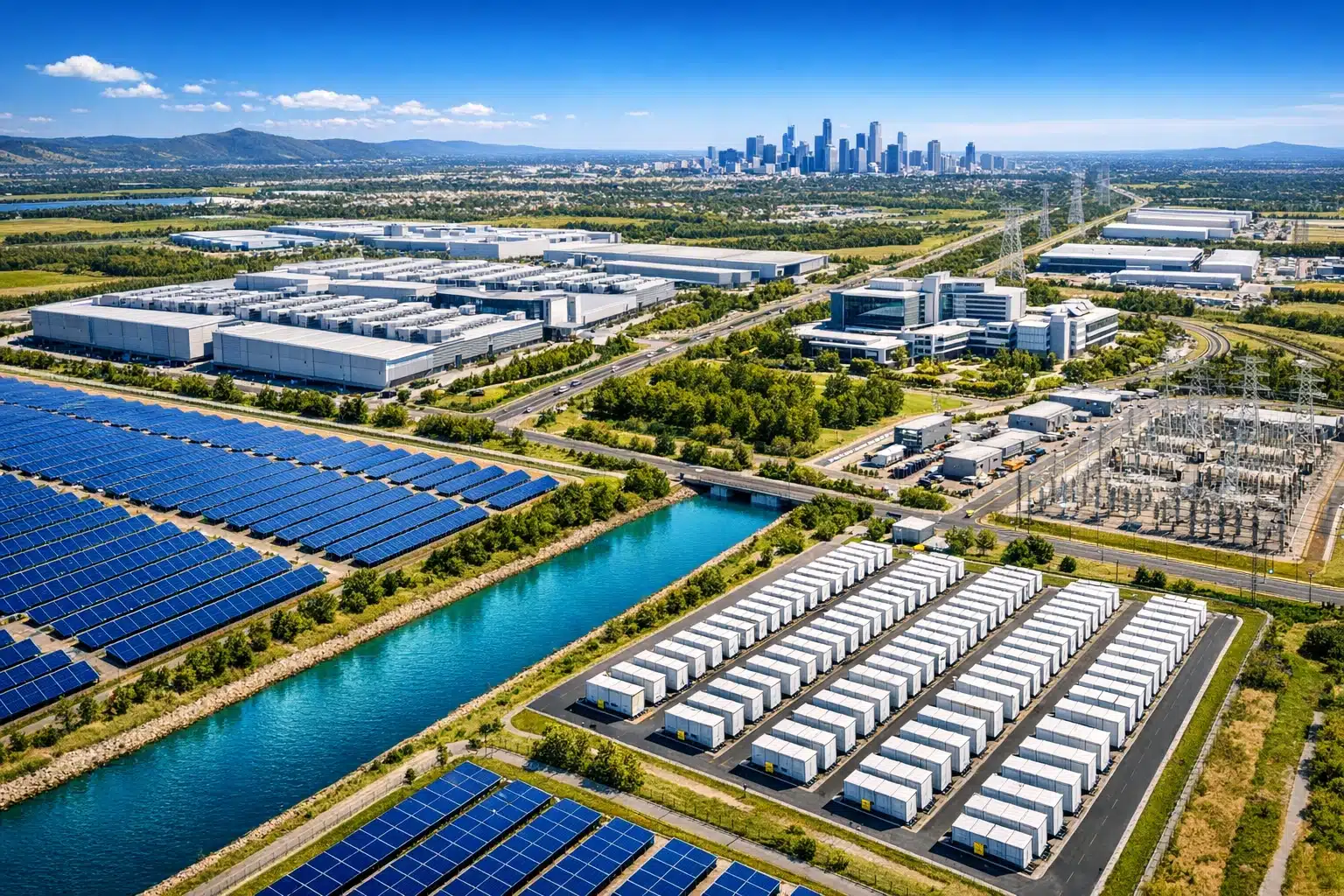
Top Investment Opportunities in 2026
2026 is shaping up to be a year when patience may matter more than prediction. Interest rates, artificial intelligence spending, energy demand, and demographic change are pulling capital toward a handful of themes, yet not every loud headline will become a durable return. This article breaks down the areas that look strongest, compares different ways to invest in them, and highlights the risks that deserve equal attention. If you want a sharper watchlist rather than another wave of hype, the sections ahead are built for exactly that.
1. Outline and the 2026 Investment Backdrop
Before chasing any single trend, it helps to begin with a map. In 2026, the most compelling opportunities are not appearing in isolation; they are connected by a few powerful forces that are reshaping how money flows through the global economy. The outline of this article is simple:
- AI infrastructure and the digital tools supporting it
- Electrification, energy transition, and grid modernization
- Healthcare innovation and the business of aging populations
- Income-producing assets and practical portfolio construction
That outline matters because the market environment of 2026 is different from the easy-money years when almost any growth story could attract capital. Investors have spent the last few years adjusting to higher borrowing costs, tighter credit conditions, and a world in which profitability has regained center stage. Even if interest rates ease from earlier peaks, they are still high enough to punish weak balance sheets and reward businesses with pricing power, real cash flow, and durable demand.
One of the biggest mistakes investors make in this kind of market is confusing a good story with a good investment. A sector can be exciting and still be overpriced. Another can look dull and quietly produce reliable returns because it sits on top of a structural trend. Utilities, grid equipment, industrial software, and diagnostic tools rarely dominate social media chatter, yet they often benefit from the exact same forces that make flashy sectors popular. When artificial intelligence expands, for example, it does not only lift software firms. It also raises demand for chips, energy infrastructure, cooling systems, security tools, and specialized real estate.
Another important feature of 2026 is concentration risk. In recent years, a relatively small number of mega-cap companies captured an outsized share of market gains. That does not mean those firms are poor investments now, but it does mean investors should compare them against second-order beneficiaries. In many cases, suppliers, infrastructure owners, and niche enablers offer more reasonable valuations and broader upside if a theme continues to spread across the economy.
For individual investors, the key question is not, “What will definitely win?” No honest analysis can promise that. The better question is, “Which themes have multiple paths to growth, and which vehicles let me participate without taking unnecessary risk?” That mindset leads naturally toward diversified exposure, measured position sizing, and a willingness to look beyond the most obvious names. Think of 2026 less like a gold rush and more like a network of roads: the loudest destination gets attention, but the businesses selling picks, power, land, and tools may collect steadier tolls along the way.
2. AI Infrastructure: Chips, Cloud, Data Centers, and Cybersecurity
If one theme continues to dominate investor attention in 2026, it is artificial intelligence. But the real opportunity is broader than buying the most famous AI stock and hoping the trend keeps running. AI is no longer just a software story. It is an infrastructure story, a power story, and a security story. That distinction matters because it opens the door to several layers of investment exposure, each with different risk and reward profiles.
The first layer is semiconductors. Advanced AI models rely on high-performance chips, memory, networking hardware, and increasingly sophisticated packaging. Demand has spread beyond pure chip designers to foundries, semiconductor equipment makers, specialty material suppliers, and firms that build the networking fabric connecting data centers. In practical terms, investors can compare opportunities across at least three buckets:
- High-growth chip designers with strong AI exposure but often rich valuations
- Foundries and equipment suppliers that benefit from rising fabrication complexity
- Memory, interconnect, and cooling specialists that gain as workloads scale
The second layer is cloud and data center infrastructure. Major technology companies have been spending tens of billions of dollars on AI-related capital expenditure, and that spending does not stop at graphics processors. It flows into server racks, liquid cooling, backup power systems, networking switches, fiber connectivity, and specialized real estate. Industry estimates now suggest data center electricity demand could rise sharply through the second half of the decade, especially in regions with heavy AI deployment. That makes data center operators, electrical equipment firms, and even some regulated utilities more relevant to the AI theme than many investors first assume.
The third layer is cybersecurity. As companies automate workflows and plug more critical systems into cloud-based AI tools, the attack surface expands. Global cybersecurity spending is already well above the level it was a few years ago, and security budgets often hold up better than discretionary IT budgets because protection is not optional. Within this area, identity management, endpoint protection, cloud security, and AI-assisted threat detection stand out.
Comparing these choices is useful. Pure AI application companies may offer explosive upside if they achieve scale, but their competitive risks are high. Infrastructure providers tend to have clearer demand visibility, though some face cyclical swings and capital intensity. Cybersecurity companies may grow more steadily, yet valuations can still become stretched after strong rallies. For most investors, the sensible takeaway is balance. Exposure across chips, infrastructure, and security can be more resilient than a single all-or-nothing bet.
The biggest risks are equally clear: valuation excess, supply chain disruption, export controls, and the possibility that short-term AI enthusiasm outruns real revenue adoption. Still, when a theme requires physical equipment, software layers, and constant defense, it usually creates more than one winner. In 2026, AI looks less like a single stock story and more like an ecosystem with several investable entry points.
3. Electrification and Energy Transition: Following the Power Demand
One of the most underappreciated investment themes of 2026 is simple enough to fit on a sticky note: the world needs more electricity, and delivering it requires more than solar panels alone. Electrification is being driven by multiple sources at once, including EV adoption, factory reshoring, building upgrades, AI-driven data centers, battery storage, and the long, unglamorous work of replacing aging grids. When several demand streams converge on the same bottleneck, investment opportunities tend to multiply.
Recent estimates from major energy agencies have put annual clean energy investment in the trillions of dollars globally, and that figure tells only part of the story. The opportunity is not limited to renewable developers. In fact, some of the most interesting businesses in this theme are the suppliers and operators behind the curtain:
- Grid equipment makers producing transformers, switchgear, cables, and control systems
- Utilities investing in transmission, distribution upgrades, and regulated infrastructure
- Battery storage firms and power management specialists helping smooth variable supply
- Industrial automation companies improving energy efficiency in factories and buildings
Why does this matter for investors? Because the economics can differ dramatically. Renewable project developers may offer strong growth, but they can be sensitive to interest rates, subsidy changes, and permitting delays. Regulated utilities often grow more slowly, yet they may benefit from visible capital expenditure plans and relatively predictable cash flows. Equipment providers sit somewhere in the middle: they may not own the assets, but they sell the essential hardware needed to build and maintain them.
Nuclear energy has also returned to serious investor discussion in 2026, largely because it offers low-carbon baseload power at a time when round-the-clock electricity demand is climbing. That does not mean every nuclear-related stock is attractive, but it does widen the investable universe to include uranium supply chains, engineering services, and specialized component manufacturers. Natural gas infrastructure may also remain relevant in many markets as a transition support, especially where reliability remains a political and economic priority.
From a comparison standpoint, electrification offers a choice between growth and stability. Early-stage clean-tech names can surge when policy support is strong, but established electrical infrastructure businesses may provide a steadier way to benefit from the same long-term shift. If the AI boom is the headline, the power grid is the fine print investors should not skip.
The key risks here include policy reversals, project delays, rising input costs, and local opposition to major infrastructure builds. Yet unlike short-lived market fashions, power demand is anchored in physical reality. The world cannot digitize, decarbonize, and reindustrialize without building more capacity. That makes electrification one of the clearest structural opportunities on the 2026 map.
4. Healthcare Innovation and the Longevity Economy
Healthcare has a habit of becoming interesting just after investors stop calling it exciting. In 2026, it deserves renewed attention because two powerful trends are converging: innovation is changing how diseases are detected and treated, and aging populations are increasing demand for care, devices, diagnostics, and service capacity. The result is not a single “hot trade,” but a broad field of opportunity that spans growth, quality, and defensive characteristics.
Start with demographics. By the end of this decade, the global population aged 65 and older is expected to exceed one billion. That shift affects far more than hospitals and pharmaceutical companies. It lifts demand for orthopedic devices, cardiac monitoring, imaging systems, cataract treatment, home health services, rehabilitation tools, and senior-focused housing and care platforms. In other words, aging is not just a social trend; it is an economic engine.
Then there is innovation. Advances in genomics, precision medicine, robotic surgery, diagnostic testing, and AI-assisted drug discovery are making healthcare more data-driven and, in many areas, more efficient. Investors looking at this theme can compare several routes:
- Large pharmaceutical companies with scale, cash flow, and pipeline diversification
- Biotech firms with higher upside but substantial clinical and regulatory risk
- Medical device makers serving recurring procedural demand
- Life science tools, contract research, and manufacturing providers that support the whole industry
For many investors, the “picks and shovels” segment of healthcare is especially attractive. Companies that supply lab instruments, testing platforms, clinical trial services, or specialized manufacturing often benefit regardless of which single drug becomes a blockbuster. They can offer less drama than small biotech, but sometimes better risk-adjusted economics. That is a useful contrast in a sector known for binary outcomes.
Another pocket worth watching is metabolic health and chronic disease management. New therapies for obesity and related conditions have reshaped expectations across pharmaceuticals, devices, nutrition, and insurers. That does not mean every adjacent company will benefit, yet it shows how one medical breakthrough can ripple across multiple industries. Similarly, remote monitoring and home-based care models continue to attract attention because they may reduce costs and improve convenience, especially for older patients managing long-term conditions.
The risks in healthcare are real and should be respected. Patent cliffs can pressure large drug makers. Smaller biotech firms can fail in late-stage trials. Device companies may face reimbursement changes, and service providers can struggle if hospital budgets tighten. Still, healthcare remains one of the few areas where innovation and necessity meet. People do not stop needing diagnostics, surgery, medication management, or chronic care because the market turns moody for a quarter. For 2026 investors seeking a blend of growth potential and resilience, that makes the sector unusually compelling.
5. Income, Real Assets, and a Practical 2026 Strategy for Investors
Not every strong investment opportunity in 2026 wears the badge of disruption. Some of the most attractive ideas may come from assets that do two unfashionable but very useful things: generate income and reduce portfolio stress. After years of dramatic swings in both stocks and bonds, many investors are rediscovering the value of cash flow, valuation discipline, and assets tied to tangible demand. This is where bonds, dividend growers, infrastructure, and selected real estate deserve a closer look.
Start with fixed income. After the rate reset of recent years, high-quality bonds once again offer yields that can compete with riskier assets. Investment-grade corporate bonds, short-to-intermediate duration government bonds, and municipal bonds in the right tax situations can all play a role. The comparison here is practical:
- Shorter-duration bonds generally offer lower price volatility
- Longer-duration bonds may benefit more if rates fall, but they carry greater sensitivity
- Inflation-linked bonds can help if price pressures prove stickier than expected
For equity income, dividend growth often looks healthier than simply chasing the highest yield. Companies that steadily raise payouts usually have stronger balance sheets and more durable business models than firms offering very high yields under stress. Sectors like industrials, utilities, consumer staples, and select healthcare names can fit this profile. The appeal is not glamour. It is endurance.
Real assets add another layer. REITs tied to logistics, cell towers, data centers, and in some markets residential demand can offer exposure to long-term structural needs. Infrastructure funds and listed companies involved in pipelines, transmission, toll roads, or airport services may also provide inflation-linked or regulated revenue streams. Here, the trick is selectivity. Office real estate, for instance, may still face uneven demand in certain markets, while digital infrastructure and warehousing continue to benefit from powerful secular forces.
So how should an everyday investor think about 2026 as a whole? A useful framework is to combine growth themes with stabilizers rather than choosing one camp and ignoring the other. For example, an investor might hold broad market exposure, then add measured positions in AI infrastructure, electrification, and healthcare innovation, while balancing those with quality bonds and income-producing assets. That does not eliminate risk, but it can reduce dependence on a single narrative.
A simple checklist can help before committing fresh capital:
- Is the business benefiting from a real long-term trend or just temporary enthusiasm?
- Does valuation leave room for disappointment?
- Is the balance sheet strong enough for a less forgiving rate environment?
- Would you still want to own it if headlines became quieter next quarter?
For readers building or refining a portfolio in 2026, the main takeaway is clear. The best opportunities are not necessarily the noisiest ones. AI infrastructure, electrification, healthcare innovation, and income-generating real assets all stand out because they are tied to structural demand, not just market fashion. If you approach them with diversification, reasonable expectations, and a clear sense of your time horizon, you will be investing with a map instead of a mood, and that is often the more durable edge.