Best Red Light Therapy Devices for Home
Red light therapy has moved from clinics and training rooms into bedrooms, bathrooms, and home gyms because people want routines that feel practical instead of complicated. The appeal is easy to understand: a single device may support skin-focused care, post-workout recovery, and general wellness habits without demanding much time. Still, shopping is not straightforward, since design, power, wavelength, and treatment area can change the experience dramatically.
Outline
- How red light therapy works and why home devices have become popular
- The specifications that separate a useful device from a flashy but limited one
- The best device categories for skin, recovery, joints, hair, and convenience
- Safe and effective ways to use red light therapy at home
- How to match a device to your space, goals, and budget
1. Understanding Red Light Therapy at Home
Red light therapy sounds futuristic, but the basic idea is refreshingly simple. Devices emit specific wavelengths of light, most often in the visible red range of roughly 630 to 660 nanometers and the near-infrared range of roughly 810 to 850 nanometers. Red light is commonly discussed in relation to skin-focused goals because it works closer to the surface, while near-infrared light is often chosen for deeper tissues because it is less visible and can reach farther below the skin. That difference is one reason shopping for the “best” device is not just about buying the brightest panel in a glossy ad.
At home, the main appeal is convenience. A clinic appointment may offer professional oversight, but a home device wins on repetition, and repetition matters. Many user routines and published protocols involve sessions several times per week for a period of weeks rather than one dramatic treatment. In practical terms, this means a solid home device can be valuable if it is easy to use consistently. A machine that delivers reasonable output and fits naturally into your schedule may be more useful than a larger, stronger system that feels like hauling a spaceship into the living room.
Interest in red light therapy has grown because research has explored its role in areas such as skin appearance, temporary relief related to soreness, and recovery support after exercise. That said, the evidence varies by application, device quality, and treatment protocol. This is not a magic lamp, and it is not a substitute for medical care. A more realistic way to think about it is as a tool that may support certain wellness goals when used properly and patiently. Results, when they appear, tend to come from steady use rather than dramatic overnight change.
Home buyers often get lost because marketing blends together several different goals. Someone shopping for facial skin concerns may need a mask or a compact facial panel. Someone focused on larger muscle groups may need a full panel with better coverage and stronger output. A person dealing with a single trouble spot, such as a knee or elbow, may be better served by a wrap or targeted device. In other words, the best red light therapy device for home use is not one universal winner. It is the device that matches the treatment area, the time you can commit, and the level of simplicity you are likely to maintain when real life gets busy.
2. What Makes a Home Red Light Therapy Device Worth Buying
If you compare ten products in a row, the words start to blur: clinical-grade, pro-level, optimized, advanced, full-spectrum. The more useful approach is to ignore the dramatic vocabulary and examine the specifications that influence real-world performance. Four factors matter most: wavelength, irradiance, coverage, and usability. Everything else is secondary until those pillars make sense.
Wavelength is the first filter. For most home users, devices that include red light around 630 to 660 nanometers and near-infrared light around 810 to 850 nanometers are the most familiar options on the market. A face-focused device may emphasize visible red wavelengths, while a recovery-oriented panel may combine red and near-infrared diodes. Combination units are popular because they give users more flexibility. If a manufacturer does not clearly state wavelength ranges, that is a reason to pause.
Irradiance refers to how much light energy reaches a surface area, often expressed in mW/cm². This matters because treatment dose is tied to both intensity and time. Many home devices land somewhere in the broad range of roughly 20 to 120 mW/cm² at recommended distances, though the number varies by measurement method and position. Higher output can shorten session length, but bigger numbers are not automatically better. An excessively intense setup used too close for too long may be uncomfortable or simply impractical. Good dosing is less like flooring the gas pedal and more like taking a measured route that actually gets you home.
Coverage is where many buyers miscalculate. A tiny device may be fine for a small facial area, but it becomes tedious for broad treatment zones such as the back, thighs, or shoulders. Larger panels cost more, yet they often make better sense for athletes, people with general recovery goals, or households where more than one person uses the device. By contrast, a mask can be a smart buy for skincare because it places light close to the face with minimal setup.
Usability determines whether a device becomes part of daily life or a decorative rectangle in a closet. Look for practical features such as:
- Built-in timers so sessions do not turn into guesswork
- Clear distance guidance from the manufacturer
- Sturdy stands, straps, or mounting options
- Reasonable noise and heat levels
- Eye safety instructions and easy-to-read manuals
- Warranty coverage and accessible customer support
Also pay attention to build quality and transparency. Reputable companies usually publish wavelength information, recommended treatment distance, session time guidance, and safety instructions. If a listing leans heavily on miracle language but says little about technical details, skepticism is a healthy response. The best device is not the one with the loudest promises. It is the one with clear specifications, sensible design, and a setup you can see yourself using next Tuesday, not just on day one.
3. Best Device Types for Different Home Needs
The red light therapy market does not really revolve around one perfect product. It revolves around several device categories, each with a distinct strength. Choosing the right format often matters more than chasing premium pricing. A well-matched device feels helpful from the first week, while a mismatched one feels awkward no matter how elegant the packaging looks.
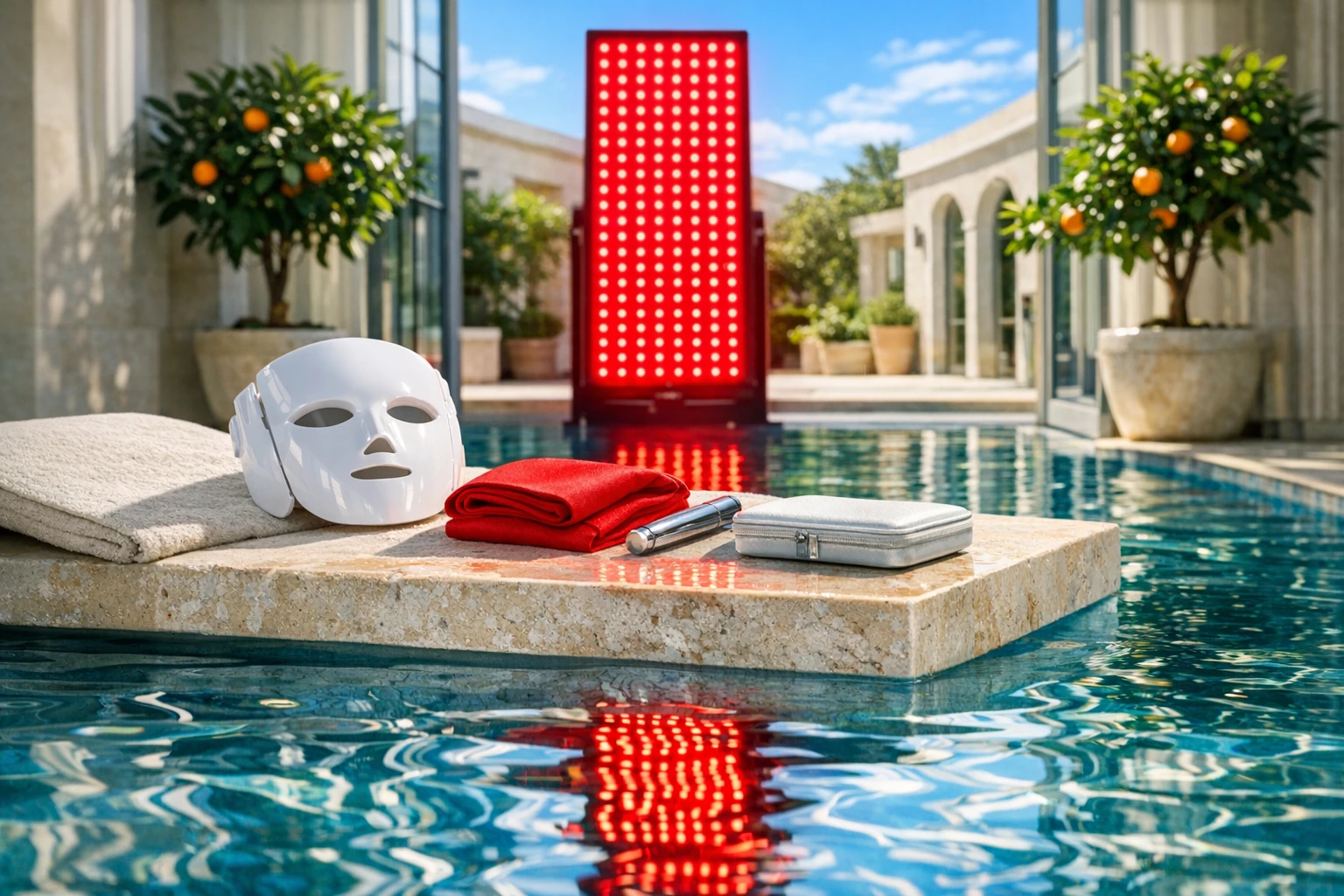
Full-size panels are often the most versatile option for home use. They can cover larger areas such as the back, chest, legs, or multiple joints, and they are frequently chosen by people interested in recovery after training or broader body sessions. Panels can also be used for the face if they allow a safe and comfortable treatment distance. Their main advantages are stronger output potential and better coverage. Their downsides are cost, space requirements, brightness, and the fact that some users find them intimidating at first.
Face masks are popular for skincare because they are convenient and easy to repeat several times a week. They sit close to the skin, which can help simplify usage. If your goal is primarily facial care, a quality mask may be more practical than a large panel. The trade-off is obvious: masks are specialized. They are not ideal if you also want to treat shoulders, knees, or large muscle groups.
Targeted handheld devices and compact wands work best for small treatment zones. Think of areas such as the jawline, hands, an elbow, or a focused patch of skin. These units are usually affordable and easy to store, making them appealing entry-level options. The drawback is time. Treating a large area with a tiny head can feel like painting a wall with a toothbrush.
Wraps, belts, and flexible pads are especially interesting for joints and body contours. Because they strap onto the area, they allow hands-free sessions and can be convenient for knees, lower back, or shoulders. This format suits people who want local treatment without standing in front of a panel. Power output varies, however, so shoppers should check specifications carefully.
Caps and helmets are a separate niche aimed at scalp and hair-related routines. They are purpose-built, which makes them convenient for that one task and not much else.
A simple way to compare the categories is this:
- Best all-around versatility: full-size panel
- Best for facial routines: LED mask
- Best for small trouble spots: handheld device
- Best for joints or curved body areas: wrap or pad
- Best for scalp-specific use: cap or helmet
For many households, the smartest choice is not the fanciest device but the format that removes friction. If it is easy to set up, comfortable to use, and suitable for the treatment area you care about most, it has a far better chance of delivering meaningful value over time.
4. How to Use Red Light Therapy Safely and Effectively at Home
Buying the right device is only half the equation. Using it well is what turns an interesting purchase into a genuinely useful habit. Home red light therapy tends to reward consistency, sensible dosing, and patience. It does not reward random marathon sessions fueled by enthusiasm and a timer that has wandered off the rails.
Most home routines are built around short sessions performed several times per week. Depending on the device and treatment area, many brands and common protocols fall in the range of roughly 8 to 20 minutes per area, often three to five times weekly. Some users start lower and adjust based on comfort and manufacturer guidance. The main point is that more time is not always better. Light dose depends on distance, intensity, and duration together. A powerful panel used from close range may need far less time than a gentler mask or pad.
Before a session, keep the treatment area clean and free from products that could interfere with comfort, especially if you are using a facial device. Follow the recommended distance rather than guessing. With panels, that distance may be anywhere from a few inches to more than a foot depending on output and the goal of the session. With masks and wraps, placement is usually more direct and straightforward.
Safety matters, particularly with bright panels and near-infrared combinations. Consider the following:
- Use eye protection if the manufacturer recommends it, especially for high-intensity panels
- Avoid staring directly into powerful LEDs
- Check with a healthcare professional if you take photosensitizing medication
- Use extra caution if you have a medical condition involving light sensitivity
- Stop if a device causes unusual irritation, excessive heat, or persistent discomfort
It also helps to track your routine. A simple note on your phone can record session length, distance, treatment area, and any visible changes over time. This is particularly useful because progress can be subtle. Skin-related goals may take weeks of regular use to evaluate fairly. Recovery-oriented users may notice differences in how a body part feels after repeated sessions, but those impressions are still worth logging rather than relying on memory.
One of the easiest mistakes is expecting a device to do everything. Red light therapy works best as part of a larger routine, not as a replacement for sleep, training balance, skincare fundamentals, or medical treatment. Think of it as a supporting actor, not the entire cast. When expectations are realistic and use is consistent, home treatment feels less like chasing a trend and more like building a calm, repeatable ritual that earns its place in the week.
5. Conclusion for Home Users: Choosing the Right Device for Your Goals and Budget
If you are trying to decide which red light therapy device deserves space in your home, start with a very ordinary question: what do you actually want it to do on a routine Tuesday? That question is more valuable than any dramatic “top-rated” badge. The right answer depends on your main goal, the area you want to treat, how much room you have, and how likely you are to keep using the device after the first burst of motivation fades.
For skincare-first buyers, a well-made mask or compact facial panel is often the most sensible route. It is focused, convenient, and easier to repeat several times a week. For people interested in broader recovery support, muscle groups, or multiple body areas, a panel usually offers better long-term value because it treats more surface area in less time. For a stubborn knee, shoulder, or lower back region, a flexible wrap may feel more practical than standing in front of a panel. For highly localized use on small areas, a handheld device can be a cost-effective starting point.
Budget should shape the decision, but it should not be the only deciding factor. A cheap device that lacks clear wavelength information, treatment guidance, or reliable support can be disappointing even at a low price. A more expensive unit is not automatically superior either. Shoppers get the best value when they pay for the right format, transparent specifications, useful accessories, and a warranty that suggests the manufacturer expects the device to last.
A simple buyer profile can help narrow the field:
- Small apartment, skincare focus: choose a mask or compact facial panel
- Home gym, recovery focus: choose a medium or large panel
- Joint-specific comfort and convenience: choose a wrap or pad
- Curious beginner with limited budget: choose a targeted device from a transparent brand
- Scalp-focused routine: choose a cap or helmet designed for that purpose
For most readers, the best red light therapy device for home use is the one that matches a clear goal and makes regular use easy. Look for honest specifications, a realistic treatment plan, and a design that fits your daily rhythm. When those pieces line up, red light therapy has a much better chance of becoming a useful tool rather than another ambitious purchase that quietly retires to a drawer.