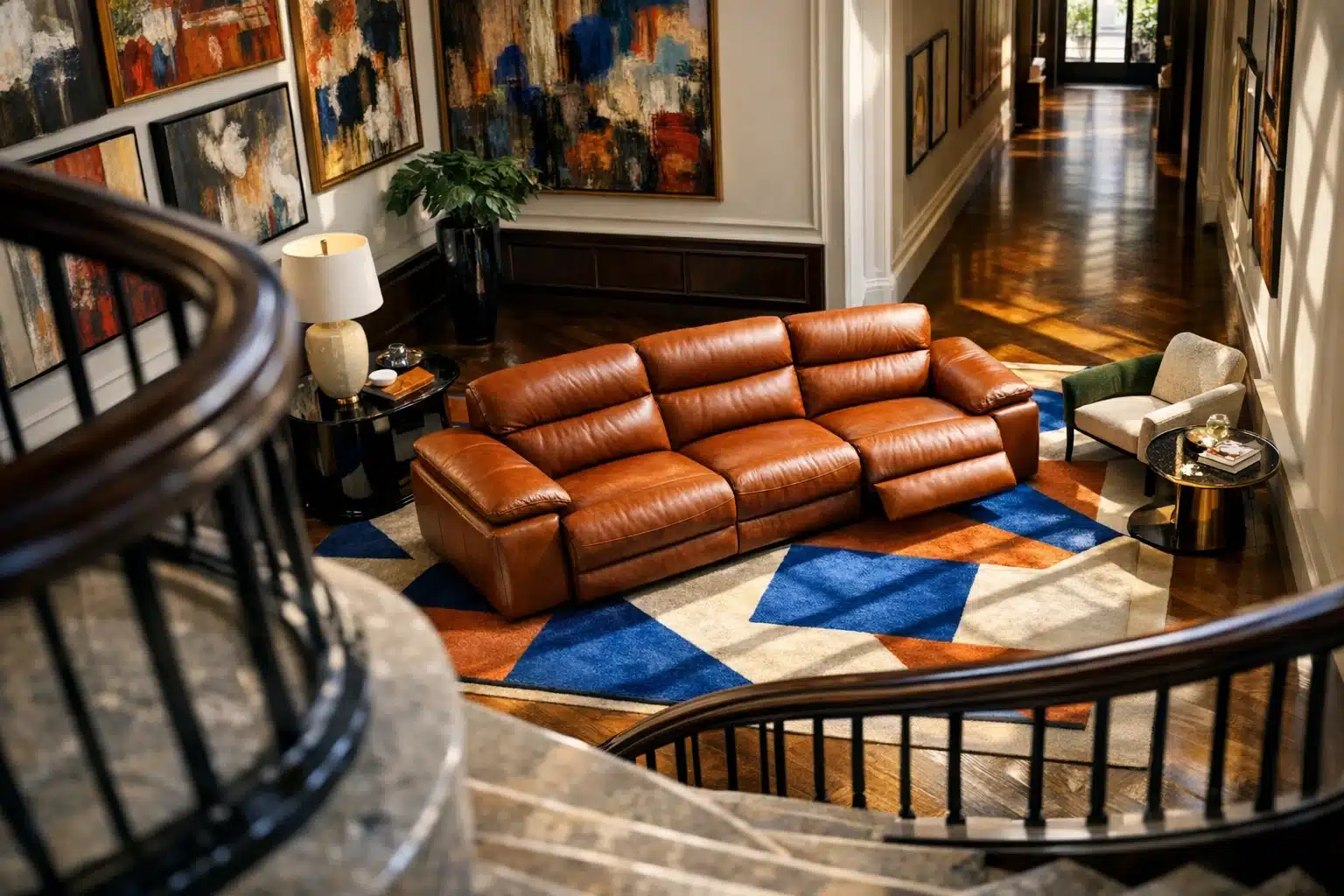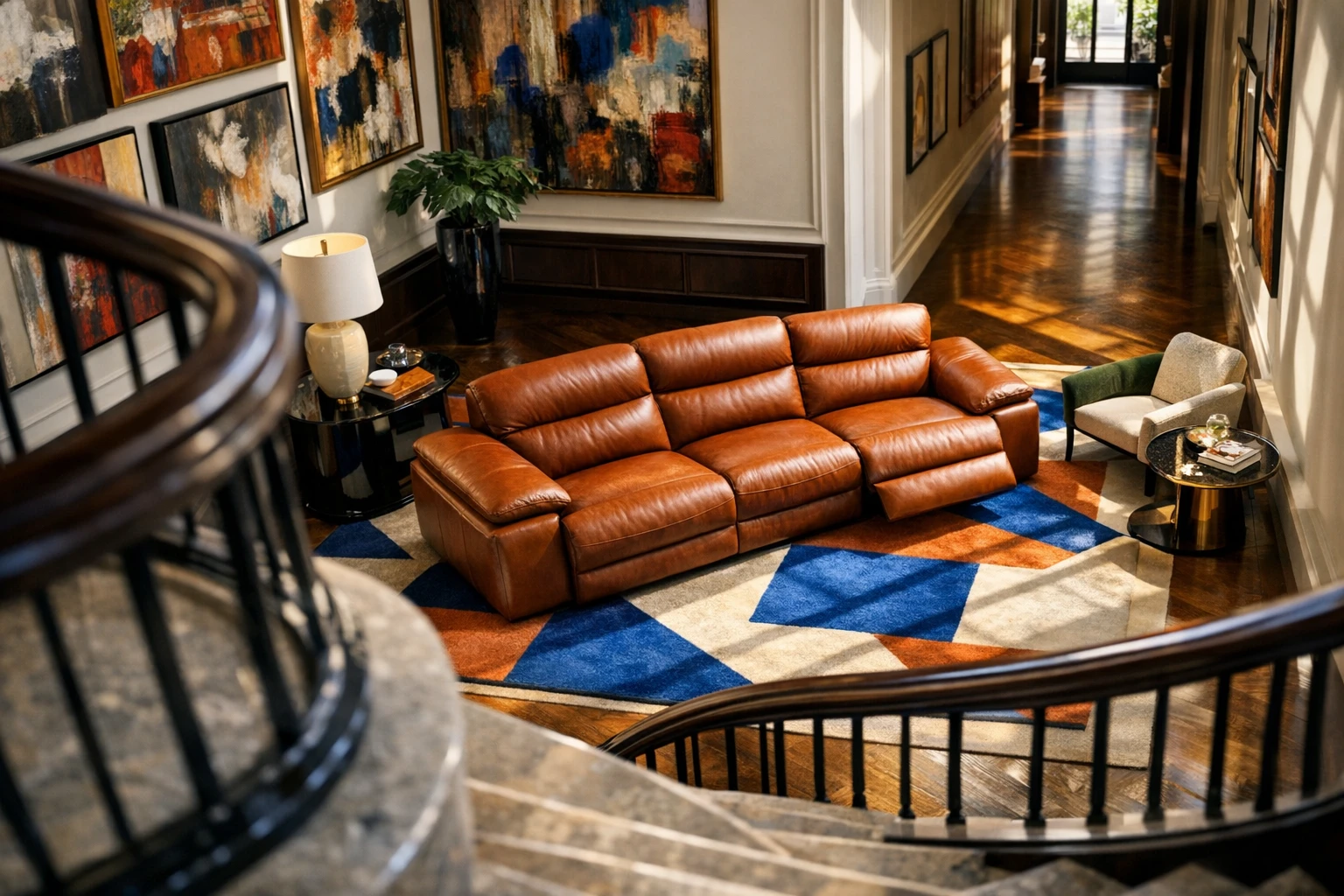
Leather Recliner Sofa Buying Guide
Outline
This guide starts with the basics of what sets a leather recliner sofa apart, then moves into material quality, frame construction, and comfort testing. It also explains how to measure your room, compare manual and power mechanisms, and sort useful features from flashy extras. Budget expectations, upkeep, and long-term ownership costs are covered so you can buy with open eyes. If you want a sofa that feels inviting and looks right in your space, the next sections will help you narrow the field quickly.
1. Why a Leather Recliner Sofa Is a Distinct Category of Seating
A leather recliner sofa is not just a regular couch with a footrest tucked inside. It blends upholstered seating, motion furniture, and visual statement into one large purchase, which is why buyers should judge it differently from a fixed sofa or a casual recliner chair. In many homes, it becomes the command center of daily life: the spot where workdays end, pets attempt to claim territory, children gather for cartoons, and guests silently calculate whether they should leave. That level of use makes comfort and durability more than lifestyle perks. They become practical requirements.
One reason this category matters is the balance it tries to strike. Leather brings a tailored, structured look that often feels more polished than bulky microfiber recliners. Reclining mechanisms add flexibility that traditional leather sofas do not provide. That combination appeals to households that want comfort without making the room look like a media bunker. A well-chosen model can fit a modern apartment, a suburban family room, or a den with dark wood and bookshelves. The best options manage to feel relaxed and refined at the same time, which is harder to achieve than showroom lighting suggests.
When comparing reclining sofas, the first big divide is manual versus power operation. Manual recliners are usually simpler, often less expensive, and less dependent on nearby outlets. Power recliners tend to offer smoother movement and can include adjustable headrests or lumbar support. Many shoppers also run into terms such as wall-hugger, zero-gravity, dual-power, and console sofa. These are not marketing decorations; they affect real-life use. A wall-hugger design may need only a few inches of clearance from the wall, while a traditional recliner may need much more space behind it.
It also helps to compare leather recliner sofas with nearby alternatives: • A standard leather sofa usually looks slimmer and can be easier to place in tight rooms. • A fabric recliner sofa may feel softer at first touch and can cost less, but it can also trap odors or show wear differently. • Individual recliner chairs give flexible seating layouts, yet they rarely create the same cohesive look as a full sofa.
The real value of understanding the category early is that it prevents mismatched expectations. Some buyers want a sleek design and discover later that deep reclining mechanics create a larger profile. Others focus only on softness and miss the fact that firm, supportive cushions often age better. A leather recliner sofa can be an excellent purchase, but it rewards shoppers who treat it as a long-term piece of equipment as much as a decorative object.
2. How to Judge Leather Quality, Frame Strength, and Overall Construction
If you remember only one part of this guide, make it this one: the quality of the leather and the build underneath it will shape your ownership experience far more than a dramatic showroom first impression. The word leather on a product page does not tell you enough. Some sofas age into character, developing a softer hand and a rich patina. Others crack, peel, or sag long before the financing offer is forgotten. The difference usually starts with material grade, surface treatment, and the quality of the frame, suspension, and cushions below the upholstery.
Leather terminology can be confusing because retail language is not always educational. A few useful distinctions make shopping easier: • Full-grain leather keeps the natural surface and is prized for durability and character, though it is less common on mass-market reclining sofas. • Top-grain leather is widely used on better-quality furniture and is often sanded or finished for a more uniform look. • Corrected-grain or pigmented leather has a heavier finish, which can improve stain resistance but may feel less natural. • Genuine leather means real leather, but it is not a quality ranking by itself. • Bonded leather is made from leather fibers mixed with other materials; it can look good initially, but long-term durability is often weaker. • Faux leather or polyurethane can be budget-friendly and easy to wipe clean, though it usually does not age like natural hide.
Construction matters just as much. Look for kiln-dried hardwood or engineered hardwood frames rather than lightweight softwood alone. A stable frame helps reduce wobble and creaking over time, which matters on motion furniture because the mechanism introduces extra stress points. In the seat system, sinuous springs are common and can perform well when properly installed. Cushion fill also deserves attention. High-density foam generally keeps shape better than very soft, low-density foam that feels plush for five minutes and tired after one year. Some premium sofas add fiber wrap or memory foam layers for a softer top feel.
Check the practical details too. Ask whether the seating areas are fully leather or leather match, meaning real leather on touch surfaces and a synthetic material on the sides and back. Leather match is not automatically bad, but it should be priced honestly. Examine stitching consistency, seam placement, and how the panels line up. On a reclining sofa, loose seams and poor panel tension can become more noticeable as parts move repeatedly.
Think of the build like the unseen engine in a car. The shine may attract you from across the room, but the internal quality determines whether the piece still feels trustworthy years later. A sofa that looks merely good and is built well is often the smarter purchase than one that looks luxurious under store lights but cuts corners where the eye does not naturally land.
3. Sizing, Room Planning, and Comfort Testing Before You Buy
A leather recliner sofa can fail in two ways before it even enters your home: it can be too large for the room, or it can fit the room but not the people using it. Both mistakes are common because buyers tend to focus on width while ignoring depth, wall clearance, doorway access, and seated ergonomics. A sofa may look perfect on a website, yet the first real test comes when it collides with a stair turn, blocks a walkway, or leaves your feet dangling like a child in an oversized armchair.
Start with room dimensions, but do not stop there. Measure the open wall, the available depth, and the path the sofa must travel. That includes entry doors, elevator dimensions, hallways, staircases, and tight corners. Reclining sofas often arrive in multiple pieces, which helps, but not all models break down the same way. If you are shopping online, confirm the boxed dimensions and minimum doorway width. In a modest living room, even an 84-inch sofa can feel heavy if the arms are thick and the back is tall. Slimmer arms and a raised leg design can make a room feel less crowded even when the seat width is similar.
Comfort measurements matter just as much as room measurements: • Seat depth affects whether you sit upright comfortably or need extra pillows behind your back. • Seat height influences how easy it is to stand up, especially for older adults. • Back height matters for shoulder and head support. • Recline length determines whether the extended footrest leaves enough circulation space in front of the sofa. • Wall clearance varies by model, with some needing only a few inches and others needing much more.
If possible, sit in a display model for longer than a quick bounce test. Five minutes reveals little. Fifteen minutes tells you more about lumbar support, pressure points, and whether the headrest hits your neck at an awkward angle. Try the recline fully open, half-open, and fully closed. See how easy it is to operate the mechanism, and note whether the footrest edge feels supportive or cuts into the legs. If more than one person will use the sofa regularly, bring them if you can. A seat that suits a tall buyer may frustrate someone with a shorter frame.
There is also the visual side of scale. A large recliner sofa can make a room feel anchored and cozy, but it can also flatten the space if paired with oversized tables and dark finishes. Lighter leather tones, cleaner arm shapes, and careful spacing can keep the room breathable. Good planning means the sofa reclines without hitting furniture, people can still walk around it, and the room does not feel like the seating swallowed the architecture. That is the quiet magic of proper fit: nothing looks strained, and nothing feels accidental.
4. Features, Style Choices, and What Different Budgets Usually Buy
Once you have narrowed down size and construction, the next layer is where buying gets fun and a little dangerous. This is the stage where shoppers meet glowing buttons, power headrests, hidden cup holders, storage consoles, USB ports, wireless charging pads, heat, massage, and names that sound as if the sofa was designed for a spaceship. Some of these features are genuinely useful. Others are expensive distractions that may matter less after the first two weekends. A smart buying guide does not dismiss features, but it asks whether they improve daily use or simply inflate the final bill.
Power recline is one of the most practical upgrades because it allows more precise adjustment than a manual pull. Dual-power systems, which separate the footrest and headrest controls, can be especially helpful for readers, streamers, and anyone who likes to sit semi-reclined rather than fully flat. Adjustable lumbar support is another feature worth serious attention if comfort is a priority. USB ports are convenient, though they should not outweigh more basic quality considerations. Heating and massage functions appeal to some users, but they add components that may complicate service and repair later.
Style matters too, and this is where leather has a real advantage. The same reclining function can look dramatically different depending on silhouette and finish. A pillow-arm model with plush padding gives a casual, sink-in feel that suits family rooms. A track-arm or slim-arm version can look cleaner and more contemporary. Color changes the mood as well: • Black and deep brown feel classic and hide some everyday marks. • Cognac and tan show warmth and character and often highlight the natural look of the leather. • Gray works well in modern interiors but can feel cooler if the room lacks wood or soft textiles. • Cream and lighter beige tones can look elegant, though they usually demand more careful upkeep.
Budget is where expectations need calibration. Entry-level options may use faux leather, bonded materials, or lower-grade match constructions. Mid-range sofas often provide better top-grain leather on touch surfaces, sturdier frames, and improved comfort. Higher-end models usually justify their price through better hide quality, more refined tailoring, stronger mechanisms, and enhanced customization rather than just extra gadgets. Price alone does not guarantee excellence, but extremely low pricing on a large leather recliner sofa often signals trade-offs somewhere in the package.
Try to assign your money in the right order: first toward material quality, second toward structural integrity, third toward comfort features, and last toward novelty extras. That sequence keeps you from paying luxury prices for a sofa with flashy controls and average bones. In plain terms, a reliable recliner that supports your back every evening is worth more than illuminated cup holders that wow the room for eight minutes.
5. Maintenance, Ownership Costs, and the Final Checklist Before Purchase
Buying a leather recliner sofa does not end at checkout. Ownership is easier than some people fear, but it is not completely hands-off. Leather is durable when treated sensibly, and many spills are manageable if handled quickly, yet the material still reacts to heat, dryness, sunlight, body oils, and neglect. Reclining mechanisms also bring their own maintenance reality. A good sofa should not feel like a demanding houseplant, but it does reward a little regular attention. Think of it as caring for a quality jacket you happen to watch movies on.
Daily and weekly care is straightforward. Dust and crumbs should be removed gently, especially around seams and moving joints. A soft dry cloth is often enough for routine wiping, while manufacturer-approved leather cleaners can be used when deeper cleaning is necessary. Avoid harsh household sprays unless the brand specifically allows them. Too much moisture can be as unhelpful as too little. Direct sunlight can fade leather over time, and placement near heating vents may dry it out. Pet claws, metal rivets on clothing, and sharp toys are also more important than many buyers assume because surface scratches show differently depending on leather finish.
A practical upkeep routine looks like this: • Wipe spills promptly rather than letting them sit. • Vacuum creases and mechanism areas with a soft brush attachment. • Rotate cushions if the design allows it. • Follow brand guidance on conditioning instead of over-applying products. • Keep the recliner mechanism clear and listen for new noises that suggest loose hardware. • Use surge protection for power models when appropriate.
Ownership costs include more than the sticker price. Delivery, assembly, extended warranties, return shipping, protection plans, and possible battery packs for cord-free power use can all affect the final number. Read the warranty carefully. Motion mechanisms, motors, and leather coverage often have different terms. A lifetime warranty on the frame sounds impressive, but if the leather and cushions are covered for a much shorter period, that matters too. Return policies deserve close attention, particularly with custom orders, which are often non-refundable once production begins.
Before you buy, run a final checklist. Confirm the exact leather type. Verify whether all seating surfaces are real leather. Check wall clearance, room fit, and delivery access. Test the comfort in seated and reclined positions. Review warranty coverage in writing. Ask who handles service if a motor or switch fails. If shopping online, read recent reviews for comments on assembly, comfort after several months, and customer support rather than relying only on day-one praise.
The right purchase is usually not the one that shouts loudest from the screen. It is the one that matches your room, your habits, your body, and your budget with quiet confidence. When those pieces line up, a leather recliner sofa stops being just another item on a receipt and becomes one of the most rewarding seats in the house.
Conclusion for Everyday Buyers
If you are shopping for a leather recliner sofa, focus on the fundamentals before the finishing touches. The strongest choices usually combine honest leather information, dependable construction, a size that suits the room, and comfort that still feels good after more than a showroom minute. Extra features can be worthwhile, but they should support your routine rather than distract from quality. Buy with patience, measure carefully, ask direct questions, and you are far more likely to end up with a sofa that looks good, functions smoothly, and earns its place in your home for years.