Robotic Lawn Mower: A Practical Guide to Features, Benefits, and Buying Tips
The idea of a mower roaming the yard on its own once felt like something from a trade-show demo, yet it has become a practical option for many homeowners. As quieter outdoor tools, app controls, and better batteries move into the mainstream, robotic mowers now sit at the crossroads of convenience, lawn health, and modern home care. They are not effortless in every setting, though, so understanding their strengths, limits, and buying criteria matters before you invest.
Outline: • How robotic lawn mowers work and why their cutting method differs from traditional mowing • Benefits, drawbacks, and the real-world trade-offs behind convenience • Features to compare before buying, from navigation and slope handling to security and apps • Installation, maintenance, safety, and seasonal care • Buying advice for different households, yard types, and budgets
How Robotic Lawn Mowers Work
A robotic lawn mower is best understood as a small, battery-powered machine designed to cut a little grass at a time, but to do so often and consistently. Instead of waiting for the lawn to grow tall and then attacking it in one heavy session, the robot trims frequent, light clippings. Those tiny clippings usually fall back into the turf, where they can decompose and return nutrients to the soil. This method is one reason many owners notice a more even lawn surface over time. The robot becomes less like a weekend tool and more like a quiet groundskeeper that never really clocks out.
Most models rely on one of two navigation approaches. Traditional units use a boundary wire installed around the perimeter of the lawn and around areas that should be avoided, such as flower beds, ponds, or tree rings. The mower detects that wire and stays within the defined space. Newer wire-free models may use RTK satellite positioning, onboard cameras, ultrasonic sensors, or a mix of these systems to map and navigate the yard. Boundary-wire systems are usually dependable once installed, while wire-free systems can be easier to revise if you change the landscape. The trade-off is that advanced navigation often costs more and may require a stronger satellite signal or clearer yard visibility.
The cutting mechanism is also different from a walk-behind mower. Rather than using a large, single blade, many robotic mowers use a spinning disc with small pivoting razor blades. This setup is energy efficient and well suited to regular, shallow cuts. Cutting height is typically adjustable, often in a range around 20 to 60 millimeters, depending on the model. Most units return to a charging dock automatically when the battery gets low, recharge, and then resume mowing. Runtime varies, but many home units operate for roughly 60 to 180 minutes per charge, depending on terrain, grass density, and battery size.
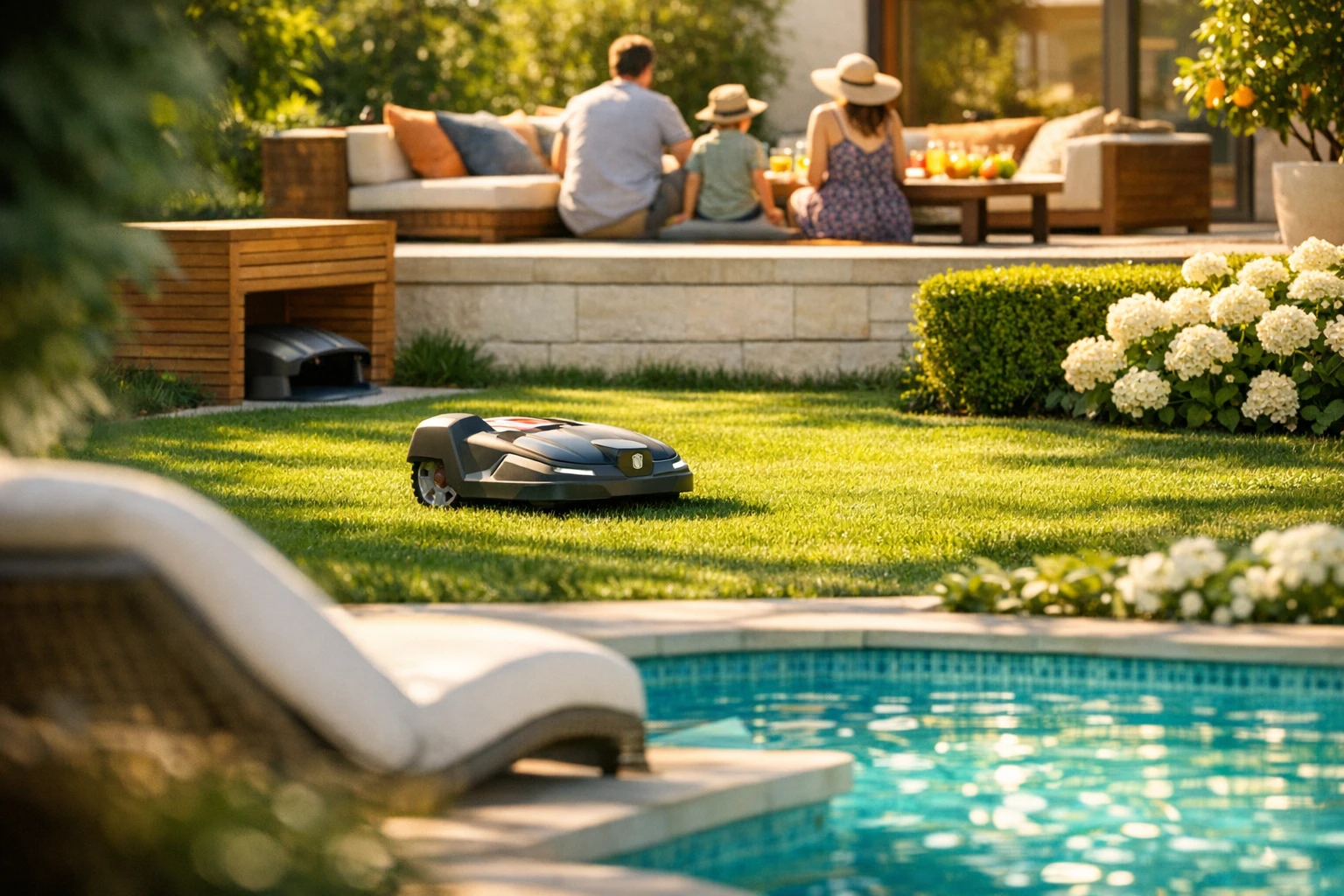
Obstacle detection and safety systems are central to daily use. Common features include lift sensors that stop the blades if the mower is picked up, tilt sensors that halt cutting on sudden movement, bump sensors that redirect the machine after contact, and PIN or app locks to reduce theft risk. Some advanced models can handle multiple lawn zones, narrow passages, and scheduled mowing through a phone app. When everything is working well, the result can feel almost theatrical: the dock sits quietly at the edge of the yard, the mower slips out on schedule, traces its route with calm purpose, and leaves behind a lawn that looks maintained without the drama of a loud engine.
Benefits and Limitations in Everyday Use
The biggest selling point of a robotic lawn mower is time. For homeowners who spend one to three hours each week mowing during peak growing season, automation can free up a surprising amount of personal time across a year. That benefit is especially appealing for busy families, frequent travelers, older homeowners, or anyone who simply does not enjoy pushing a mower in summer heat. Because robotic mowers work on a schedule, they can keep the grass consistently short without demanding a block of weekend effort. There is also the noise advantage. Many robotic units operate in the range of roughly 55 to 65 decibels, far quieter than many gas mowers, which often exceed 85 decibels and can require hearing protection during prolonged use.
Lawn quality is another practical advantage. Frequent cutting encourages a tidy appearance and avoids the shock that can happen when too much grass is removed at once. Because the clippings are small, they usually disappear into the turf rather than forming visible piles. This can support a healthier lawn-care routine, provided the grass is not wet and overgrown when the robot starts. Battery-electric operation also means no gasoline, no oil changes, and no tailpipe emissions at the point of use. For some buyers, that cleaner maintenance profile matters as much as convenience. There is a subtle pleasure here too: instead of hearing a mower roar across the neighborhood, you may see a low, deliberate machine moving through the grass like it has all day to get the job done.
Still, the category comes with clear limitations. First is price. Entry-level robotic mowers for small lawns may start around the cost of a good cordless walk-behind mower, but premium models for large or complex yards can be several times more expensive. Second is setup. A standard boundary-wire installation takes planning, patience, and sometimes professional help. Third is edge performance. Many robotic mowers do not cut flush to walls, fences, or sharply defined borders, so some trimming with a string trimmer may still be necessary. Buyers expecting a zero-maintenance lawn often discover that the robot reduces work rather than erases it.
Yard complexity matters more than marketing photos suggest. Steep slopes, many disconnected zones, heavy leaf litter, exposed tree roots, loose pine cones, and frequent toys on the lawn can all reduce performance. Wet conditions may also affect traction or clogging, even when a mower has a rain sensor or weather schedule. In short, robotic mowers are excellent at routine upkeep in the right environment, but they are not universal replacements for every mowing challenge. The best way to think about them is as specialists in steady maintenance, not miracle machines for neglected or difficult ground.
Features to Compare Before You Buy
Shopping for a robotic lawn mower gets easier once you move past generic claims and focus on specifications that genuinely shape ownership. The first and most important figure is the lawn area rating. Manufacturers usually estimate a maximum coverage area, but that number assumes favorable conditions. If your yard includes slopes, narrow passages, multiple zones, or dense seasonal growth, it is wise to buy a model rated comfortably above your actual lawn size. A mower that is undersized may spend too many hours cutting, drain its battery more often, and struggle to maintain a consistent finish during fast-growing months.
Slope handling is the next major filter. Some smaller units are comfortable on mild inclines, while higher-end models can manage significantly steeper grades. If part of your yard rises sharply, compare the stated maximum slope both inside the lawn and near the boundary. Navigation deserves similar attention. Boundary-wire models are often proven and stable, especially in properties with tree cover or difficult satellite visibility. Wire-free systems, including RTK-based mowers, can be more flexible and easier to remap when landscaping changes, but they may depend on base stations, stronger signal conditions, or clearer sky views. If your yard changes often, flexibility may outweigh the higher cost.
When comparing models, focus on features that affect real use: • Lawn size rating and runtime • Maximum slope capability • Boundary wire or wire-free navigation • Cutting height range and width • Multi-zone support and passage handling • Weather scheduling or rain response • App quality, remote updates, and notifications • Lift, tilt, GPS, and anti-theft functions • Blade cost and local service availability
Battery behavior and charging logic also matter. A machine with intelligent scheduling can adapt mowing time to growth conditions and work more efficiently than one that simply follows a rigid timer. Some premium units mow in more organized patterns, which may shorten cut time and improve coverage. Others still use a more random method, which works well over time but can look less systematic while operating. App control is useful when it solves concrete problems, such as setting zones, pausing operation, or viewing alerts. It matters less if all you want is a dependable “set it and forget it” appliance.
Finally, compare ownership costs, not just purchase price. Replacement blades, possible boundary-wire repairs, battery longevity, dealer support, and software updates all influence long-term value. A cheaper mower with weak support or hard-to-find parts can become frustrating quickly. On the other hand, a midrange model with solid documentation, reliable scheduling, and easy maintenance may deliver the best balance. Buying well means matching the mower to the yard, not choosing the one with the longest feature list.
Installation, Maintenance, and Safety Essentials
A robotic lawn mower works best when installation is treated as part of the purchase decision rather than an afterthought. For boundary-wire systems, the first task is mapping the lawn carefully. The wire must trace the perimeter and isolate no-go areas such as vegetable beds, decorative gravel, ponds, and low objects that could interfere with movement. Placement of the charging dock matters too. It usually needs a stable, fairly level location with reliable power access and enough open space for the mower to approach and leave cleanly. Taking shortcuts during setup often leads to frustrating behavior later, such as missed patches, repeated docking errors, or unnecessary stops.
Wire-free models reduce some of that physical installation work, but they replace it with digital setup. You may need to create virtual boundaries, verify signal quality, map separate zones, and test path reliability around trees, fences, and side yards. In either case, a short testing period is wise before assuming the job is finished. Let the mower run several cycles, then adjust edges, narrow routes, and restricted areas. Think of this phase as training a new helper. A little effort upfront can spare months of small annoyances.
Routine maintenance is relatively light, but it is not zero. Owners should regularly check the underside for compacted grass, wipe dirt from wheels and sensors, and inspect the blades for wear. Small razor blades may need replacement after weeks or months of use depending on lawn size, debris, and mowing frequency. A sharp blade cuts cleanly, while a dull one can tear grass and reduce appearance. Battery care is usually straightforward, yet seasonal storage still matters. In colder climates, many manufacturers recommend cleaning the unit thoroughly and storing the mower and charging components in a dry, frost-free space during winter.
Safety is one of the category’s strengths, but it deserves common sense. Most machines stop the blade disc when lifted or tilted, and many react to obstacles with bump or avoidance sensors. Even so, it is sensible to keep toys, hoses, and loose yard debris off the lawn. Households with small children should teach them not to treat the mower like a pet or a ride-on gadget. Pet owners should observe how animals react before running the mower unattended for long periods. Another important point is wildlife. Some experts recommend scheduling mowing during daylight rather than overnight, because nocturnal animals such as hedgehogs in some regions can be more vulnerable after dark. Good setup and thoughtful scheduling do more than protect the machine; they help the whole yard operate as a safer, calmer space.
Conclusion: Choosing the Right Robotic Lawn Mower for Your Yard
For the right buyer, a robotic lawn mower is not a flashy luxury but a practical shift in how routine yard care gets done. It suits homeowners who value consistency over ceremony, who would rather enjoy a tidy lawn than spend time producing it by hand every week. Busy professionals, parents with packed weekends, older adults who want to reduce physical strain, and tech-friendly homeowners with predictable yard layouts often benefit the most. A small to medium lawn with clear boundaries, manageable slopes, and limited clutter is usually the easiest environment for success. In that setting, a robot can feel less like a gadget and more like a quietly competent household appliance.
That said, not every property is an ideal match. If your yard is very steep, heavily wooded, broken into many disconnected sections, or filled with seasonal debris, a robotic mower may require more oversight than expected. It may also disappoint if you love strong lawn stripes, enjoy the ritual of mowing, or want a machine that can instantly conquer overgrown grass after two weeks of rain. In those cases, a traditional or ride-on mower may still be the more satisfying tool. The smartest buyers are the ones who compare their expectations with the mower’s actual strengths instead of assuming automation solves every outdoor task.
A practical decision framework looks like this: • Measure the real mowing area, not just the lot size • Note slopes, narrow passages, and separated zones • Decide whether boundary wire or wire-free mapping suits your yard better • Budget for installation, replacement blades, and possible servicing • Check local support, warranty terms, and spare-parts availability • Expect some edge trimming and occasional cleanup even after purchase
In summary, robotic lawn mowers make the most sense for readers who want regular maintenance, lower noise, and less hands-on work without expecting perfection in every corner. Choose one based on lawn conditions, not marketing gloss. If you buy a model that fits your space and commit to proper setup, the payoff can be meaningful: less weekly labor, steadier grass growth, and a yard that stays presentable with surprisingly little fuss. For homeowners who want their lawn cared for in the background while life moves on in the foreground, that is a compelling reason to read the product labels carefully and buy with intention.