Wooden Coffee Tables for Living Rooms: A Practical Buying Guide
Wooden coffee tables do far more than fill the space between a sofa and a rug. They shape how a living room works, from holding drinks and books to defining traffic flow, storage, and style. Because wood comes in many species, finishes, and build qualities, the right choice can feel simple at first and surprisingly complex a moment later. This guide breaks the process into clear decisions so you can buy a table that looks right, fits well, and lasts.
Article Outline
- The role a wooden coffee table plays in comfort, function, and visual balance
- The difference between solid wood, veneer, and engineered construction
- How to choose the right size, shape, and placement for your room
- Which styles, finishes, and features make daily use easier
- How to shop wisely by balancing budget, sustainability, and long-term care
The Role of a Wooden Coffee Table in the Living Room
A wooden coffee table often becomes the quiet center of the living room. It may not be the largest piece in the space, but it is one of the hardest working. In daily life, it holds mugs, remotes, books, candles, board games, and the occasional laptop balanced during a late-night burst of productivity. In visual terms, it links the sofa, chairs, rug, and media unit into a complete arrangement. Without it, many living rooms feel like a conversation circle that forgot its middle.
Wood has a special advantage here because it brings warmth in both color and texture. A glass table can look light and modern, while metal can feel sleek and architectural, but wood usually offers a softer, more grounded presence. Even in minimalist interiors, a wooden surface can keep the room from feeling cold. That is one reason wood remains a popular material across many design styles, including farmhouse, Scandinavian, mid-century, rustic, traditional, and modern transitional spaces.
Function matters just as much as appearance. A good coffee table improves how a room is used by giving people an easy surface within arm’s reach. Interior designers often think of the coffee table as a “bridge” piece because it connects seating to activity. If your living room is used for entertaining, a table makes snacks and drinks easier to serve. If the room doubles as a reading spot or family zone, the table becomes a staging area for everyday routines.
- A visual anchor that centers the seating arrangement
- An accessible surface for practical daily use
- A storage opportunity when shelves or drawers are included
- A decorative layer that adds texture, contrast, and character
Wooden coffee tables also age in a way many people appreciate. Small marks on oak or walnut often read as patina rather than damage, especially when the finish is matte or lightly distressed. That can make a wooden table feel more forgiving in homes with children, pets, or frequent guests. Instead of chasing perfection, many homeowners prefer a piece that can develop a lived-in look over time.
In short, this is not a small decision disguised as a small piece of furniture. A wooden coffee table affects the way your living room looks, feels, and functions every day. Choosing well means thinking beyond decoration and treating the table as both a design element and a tool for real life.
Understanding Wood Types and Build Quality Before You Buy
Not all wooden coffee tables are built the same, and the difference is not always obvious from a product photo. One table may be made from solid hardwood and traditional joinery, while another may use particleboard with a printed wood-look finish. Both can appear attractive online. Only one is likely to handle years of use with confidence. That is why understanding materials is one of the smartest steps in the buying process.
The first distinction to know is solid wood versus veneer versus engineered wood. Solid wood means the visible structural parts are made from actual lumber. These tables often feel heavier, can sometimes be repaired or refinished, and usually have more natural variation in grain. Veneer tables use a thin layer of real wood over a stable core, often plywood or MDF. A good veneer table can still look beautiful and may resist some types of warping because the core is engineered for stability. Engineered wood on its own can be a practical budget choice, but it generally does not offer the same longevity or repair potential as high-quality solid wood.
Wood species matter too. Hardwoods are not always literally harder than every softwood, but in furniture they usually signal better durability. Common options include oak, walnut, maple, acacia, mango wood, ash, and rubberwood. Pine is also common and often more affordable, though it dents more easily. Oak is valued for strength and visible grain. Walnut is prized for its rich brown tone and elegant appearance. Mango wood has become popular for its characterful grain and relatively sustainable appeal when sourced as a byproduct of fruit farming.
- Solid wood: durable, repairable, often heavier, usually more expensive
- Veneer over quality core: good appearance, stable construction, mid-range value
- Low-cost engineered panels: lighter on price, often shorter on lifespan
Construction details tell another part of the story. Look for features such as dovetail drawers, corner blocks, sturdy stretchers, and a finish that feels even rather than plasticky. If a table wobbles in the showroom or arrives with thin hardware and weak fasteners, that is an early warning sign. Good furniture does not need to be extravagant, but it should feel intentional.
If you shop online, read the specifications with care. Check the listed material for the top, base, and drawers separately. Some products use the phrase “wooden” very loosely. A table described as “oak finish” may not contain much oak at all. When the description clearly states “solid oak,” “oak veneer over plywood,” or “mango wood top with iron base,” you are getting more useful information. The more honest the listing, the easier it is to compare value rather than just appearance.
How to Choose the Right Size, Shape, and Placement
Even the most beautiful wooden coffee table will feel wrong if the proportions are off. A table that is too large can block movement and make the room cramped. A table that is too small may look lost, like a footnote where a headline should be. Good sizing is less about guesswork and more about a few reliable measurements that professionals use all the time.
A common guideline is length. Many designers suggest choosing a coffee table that is roughly two-thirds the length of your sofa. This is not a rigid rule, but it is a very useful starting point because it usually creates visual balance. Height matters as well. Most coffee tables are around 16 to 18 inches high, which suits many modern sofas. Ideally, the tabletop should be close to the sofa seat height, or up to 1 or 2 inches lower. If it sits much higher, it may feel awkward. If it sits far lower, everyday use becomes less convenient.
Clearance around the table is just as important. Leaving about 14 to 18 inches between the coffee table and the sofa gives most people enough reach without making the arrangement feel cramped. For walkways beyond the table, around 24 to 30 inches often helps maintain comfortable movement. These numbers are practical because they support both use and circulation, especially in busy living rooms.
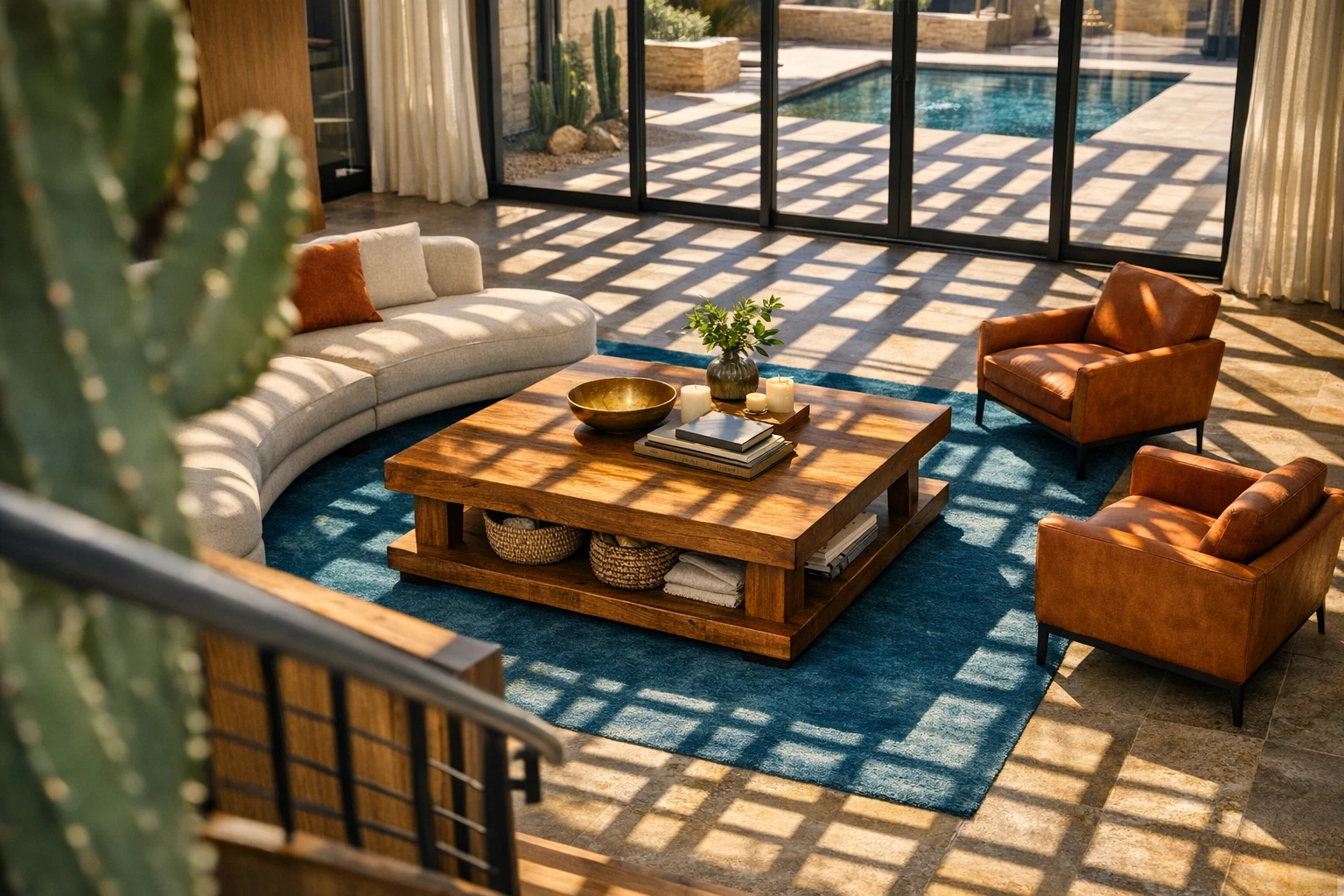
Shape changes the experience of the room. Rectangular tables are the most common because they fit standard sofas well and provide generous surface area. Round tables are often better in tighter spaces or homes with young children because they soften corners and improve flow. Square tables suit large seating arrangements, especially sectionals or rooms where seating wraps around the table. Oval designs can be a smart compromise, offering the length of a rectangle with gentler edges.
- Rectangular: best for standard sofas and longer rooms
- Round: useful in compact layouts and family spaces
- Square: ideal for sectionals or balanced seating plans
- Oval: good for narrow rooms where softer lines help movement
Placement should follow how the room is used. In a formal room, the table may sit neatly centered on a rug and align with the sofa. In a casual family room, function can take priority, especially if you need space for toys, trays, or extra seating. If the room is small, consider nesting tables or a lighter-looking base that keeps the footprint from feeling heavy. The right table should support the room’s rhythm, not interrupt it.
When in doubt, mark the proposed table size on the floor with painter’s tape. It is a simple trick, but it helps you judge scale, walking space, and reach before making a purchase. Sometimes the best buying tool is not a glossy catalog. It is a tape measure and ten quiet minutes in your own living room.
Matching Style, Finish, and Features to Everyday Life
Once size and materials are in order, style becomes the layer that gives the table personality. This is where many buyers get excited, and understandably so. A wooden coffee table can shift a room from plain to polished, from safe to distinctive, from “still figuring it out” to “this feels finished.” The trick is choosing a style that not only looks appealing in a product photo but also makes sense with the rest of your space.
Different wood tones create different moods. Light woods such as ash, oak, or birch often feel airy and relaxed, which works well in Scandinavian, coastal, and minimalist interiors. Medium woods can be versatile and easy to blend with mixed furniture. Dark woods like walnut bring depth and visual weight, often suiting mid-century, traditional, or more tailored rooms. If your living room already includes a media console, sideboard, or shelving unit, the coffee table does not need to match exactly. In fact, an exact match can make a room feel flat. Coordinated contrast is often more interesting than duplication.
Finish also affects performance. A glossy lacquered surface can look sleek, but it may show dust, fingerprints, and fine scratches more easily. Matte and satin finishes tend to be more forgiving in everyday family use. Distressed finishes can hide wear well, while raw or lightly sealed wood may need more maintenance. If you host often or have children, a table that tolerates spills and movement gracefully is usually a better long-term choice than a delicate showpiece.
Features deserve careful attention because they shape daily convenience. A simple top and four legs may be perfect in a calm, uncluttered room. In smaller homes, though, storage can change everything. Shelves, drawers, and lift-top mechanisms all serve different needs.
- Open shelves are useful for baskets, books, and trays
- Drawers hide remotes, chargers, coasters, and other small items
- Lift-top designs can support laptop use or casual dining
- Nesting pieces offer flexibility for entertaining and compact living
Style categories can guide your search:
- Farmhouse tables often feature chunky profiles and visible grain
- Mid-century designs favor tapered legs and cleaner silhouettes
- Industrial looks combine wood with black metal frames
- Contemporary pieces usually emphasize simplicity and sharp lines
The best table is rarely the one with the loudest personality. It is the one that complements your room, supports your habits, and still feels appealing after the novelty wears off. Good design is a little like good conversation: it makes an impression without trying too hard.
Buying Smart: Budget, Sustainability, Care, and Final Advice for Homeowners
A practical buying guide should end where real decisions happen: cost, value, responsibility, and upkeep. Coffee tables cover a wide price range, and the jump between budget and premium options usually comes down to materials, craftsmanship, brand positioning, and scale. Entry-level tables are often made with engineered wood or veneer and can work well in starter homes, apartments, or temporary spaces. Mid-range options frequently offer better joinery, thicker tops, and more durable finishes. Higher-end tables may use solid hardwood, handmade details, or custom construction. Price alone does not guarantee quality, but very low prices often signal compromises in material thickness, hardware, or finish durability.
If sustainability matters to you, wood can be a strong choice when sourced responsibly. Look for clear sourcing information, reclaimed wood, or certification from programs such as FSC, which indicates wood from responsibly managed forests. Reclaimed wood can add character and reduce demand for newly harvested lumber, though it may also bring natural variation, nail marks, or patching that some buyers love and others do not. Mango wood and rubberwood are often discussed as practical options because they can come from trees used first for fruit or latex production before entering furniture supply chains.
Care is simpler than many people expect. Most wooden coffee tables last longest when protected from standing water, direct heat, and extreme swings in humidity. Use coasters, wipe spills promptly, and dust with a soft cloth. Harsh cleaners are usually unnecessary and can damage some finishes. In dry climates, wood may shrink slightly; in humid spaces, it can expand. That movement is natural, which is why well-made joinery and stable construction matter.
- Measure your room, sofa height, and walking clearance before shopping
- Check whether the table is solid wood, veneer, or engineered wood
- Compare finish durability, edge profile, and storage features
- Read weight, assembly, and warranty details before ordering online
- Choose a style you will still like after trends move on
For renters, a versatile medium-size table in a classic wood tone is often the safest investment because it can adapt to future homes. For families, rounded edges, durable finishes, and forgiving surfaces usually matter more than design drama. For homeowners furnishing a long-term space, spending a bit more on solid construction can be worthwhile because this is a piece you will touch and use constantly.
In the end, the best wooden coffee table for a living room is not defined by trend labels or showroom staging. It is the one that fits your room honestly, supports your routines, and holds up to the ordinary moments that make a home feel lived in. Buy with a tape measure, a clear eye, and a realistic sense of how you actually live. That approach rarely goes out of style.