French Door Fridge Freezer Buying Guide
Choosing a French door fridge freezer is not just about finding a large appliance that fits the kitchen; it is about matching storage design, energy use, daily habits, and long-term value. This format has become popular because it combines wide shelving, eye-level access, and a freezer layout that often feels more practical than older styles. Yet prices, dimensions, and features vary widely, so a fast decision can create annoying compromises. This guide breaks the topic into clear steps so you can compare options with confidence and buy for the way you actually live.
- What defines a French door fridge freezer and why so many households prefer the layout
- How to measure your kitchen, doorway clearances, and usable interior capacity
- Which storage features, cooling systems, and convenience extras make a real difference
- How pricing, efficiency, and ownership costs compare with other refrigerator styles
- What type of buyer should choose this design and how to narrow the final shortlist
Understanding the French Door Fridge Freezer Layout
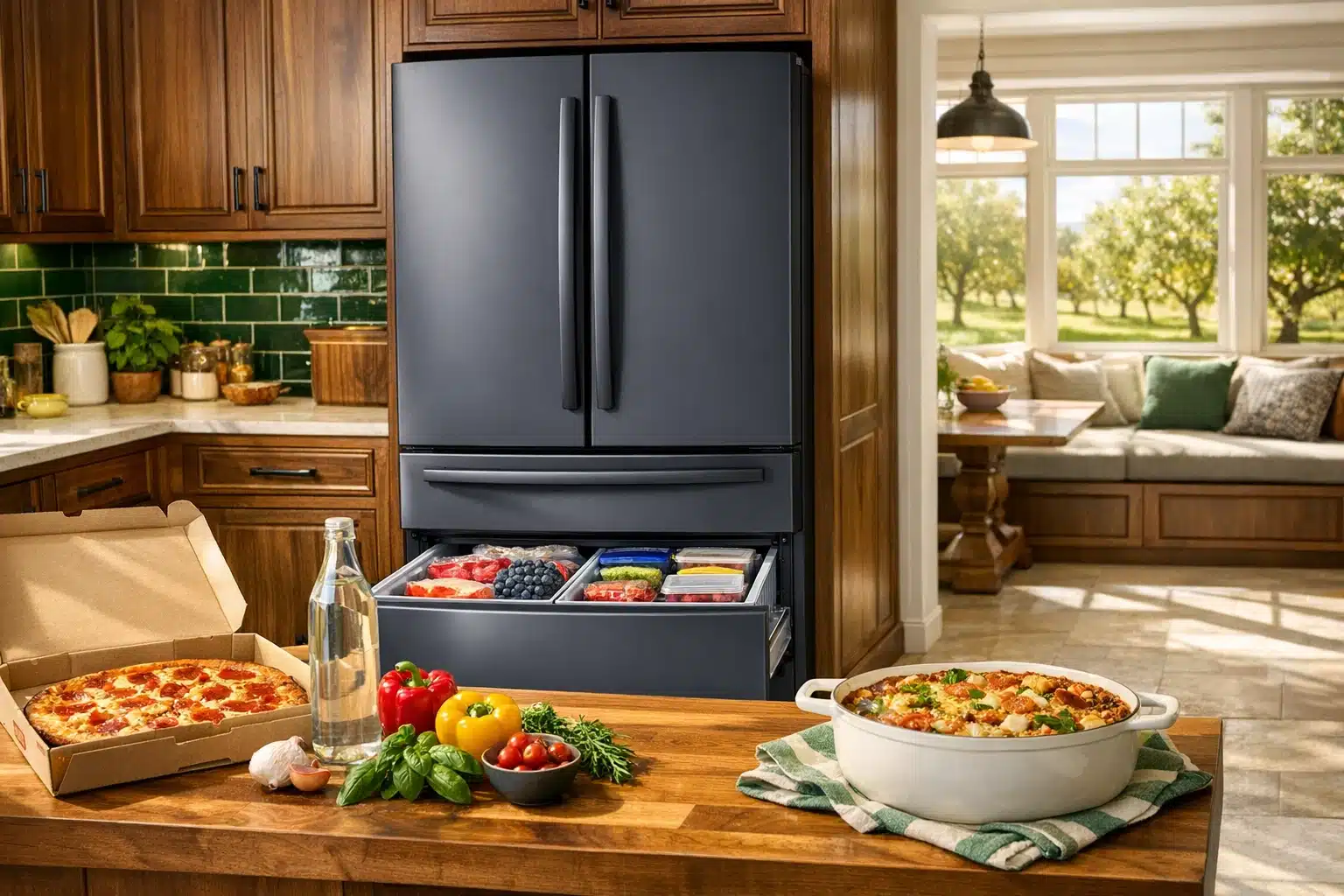
A French door fridge freezer usually places two narrow refrigerator doors on top and a pull-out freezer drawer below. At first glance, that may sound like a simple styling choice, but the layout changes daily use in ways that matter. The upper section opens wide enough to hold platters, pizza boxes, wide produce trays, and meal-prep containers that can be awkward in a top-freezer or side-by-side model. Because fresh food sits at eye level, the ingredients you use most often are easier to see. That sounds small until you realize how often people forget food that gets buried on a low shelf or behind a vertical divider.
This style has grown popular partly because it suits how many households shop and cook now. Fresh produce, dairy, leftovers, drinks, sauces, and ready-to-eat items are often accessed far more frequently than frozen goods. A French door design reflects that pattern. Instead of bending down every time you reach for milk or open one large door that spills cold air, you open one lighter door and focus on one side of the compartment. In practical terms, it can feel like the refrigerator is working with you rather than asking you to adapt to it.
There are also visual and spatial advantages. Many kitchens use a French door unit as a focal point because it gives a balanced, built-in look without always requiring a true built-in price. The doors need less side clearance than a full-width single-door refrigerator, which can help in tighter layouts or near islands. Still, the format is not automatically perfect for every home. The freezer drawer can make organization harder if it lacks sturdy bins, and some buyers discover that the lower section becomes a cold cave of forgotten bags and boxes.
When deciding whether this format suits you, think about lifestyle instead of trends. It often works especially well for:
- Families that buy lots of fresh food every week
- Home cooks who store trays, wide pans, or large serving dishes
- Open-plan kitchens where appearance matters as much as function
- Shoppers who want flexible shelf arrangements and door bins
It may be less ideal for buyers who depend heavily on frozen bulk storage, live in very compact homes, or want the simplest possible design with the fewest moving parts. A refrigerator is the quiet stage manager of the kitchen: it does its best work when nobody notices it. The appeal of French door models lies in how naturally they can support everyday routines, provided the layout matches what you actually store.
Size, Capacity, and Installation: The Checks You Cannot Skip
One of the biggest mistakes in refrigerator shopping is focusing on listed capacity before confirming whether the appliance can physically reach and properly fit the kitchen. French door fridge freezers are often wider and deeper than older designs, so measurement comes before brand preference, color choice, or feature wish list. In many markets, common widths range from about 30 to 36 inches, with larger premium models stretching beyond that. Heights often land around the upper-60-inch range, while depth varies dramatically depending on whether the unit is counter-depth or standard-depth.
Counter-depth models align more closely with cabinets and usually create a tidier, less protruding profile. Standard-depth units stick out farther but usually offer more usable interior space for the money. This is one of the most practical trade-offs in the category. A sleek exterior may look fantastic in the showroom, yet a growing family may value those extra liters or cubic feet of storage far more after a few months of grocery runs.
Take measurements in three stages:
- The destination space: width, height, and depth of the refrigerator alcove
- The access route: front door, hallway turns, stairs, and kitchen entry points
- The operating clearance: room for doors to open and drawers to extend fully
Buyers often forget the third point. A refrigerator may fit the opening but still feel cramped in use if the doors cannot swing comfortably beside a wall, pantry, or island. Water-line access also matters if you want an ice maker or dispenser, and floor leveling should not be ignored in older homes where surfaces can be slightly uneven. Even a premium model will feel annoying if doors drift or seals do not sit evenly because the appliance was poorly installed.
Capacity deserves a more thoughtful look than raw numbers. Two refrigerators can share a similar official volume while offering very different usable storage. Wide shelves, split shelving, gallon-door storage, convertible compartments, and freezer basket design all affect what fits in real life. If you shop for weekly family groceries, store tall drink bottles, or keep large leftovers, take note of interior geometry rather than relying only on specifications. A unit with 22 cubic feet that is intelligently arranged may serve you better than a 25-cubic-foot model with awkward compartments.
Before buying, ask yourself a few practical questions. Do you batch cook and store large containers? Do you freeze meat in bulk? Do you need room for party platters during holidays? Are you replacing an older refrigerator because it felt too small, or because it was badly organized? Those answers will guide whether you need a slim counter-depth model for visual harmony or a deeper unit that behaves like a pantry with a compressor attached. Good measurement prevents expensive regret, and in appliance shopping, regret usually arrives in stainless steel.
Storage Design, Cooling Performance, and Features That Matter
Once size is settled, the next step is separating genuinely useful features from shiny distractions. French door fridge freezers often come loaded with adjustable shelves, humidity-controlled crisper drawers, door bins, dual cooling systems, smart screens, water dispensers, and flexible temperature zones. Some of these additions improve day-to-day convenience in meaningful ways; others mainly raise the price and introduce more parts that may eventually need service.
Start with storage design. The most practical interiors usually include split shelves that let you place a tall jug on one side without sacrificing a full shelf above it, deep and sturdy door bins for large bottles, and clear drawers that slide smoothly even when loaded. Crisper drawers matter more than many buyers expect. Good humidity control can help leafy greens, herbs, berries, and peppers stay in better condition longer, which may reduce waste. If you regularly throw away wilted produce, storage quality is not a luxury feature; it is part of the appliance’s everyday value.
Cooling performance is equally important. Look for features such as:
- Even air circulation to reduce warm spots
- Independent temperature control for fridge and freezer sections
- Fast-cool or fast-freeze functions after a large grocery trip
- Stable seals and solid drawer construction to keep cold air contained
Many modern models use inverter compressors, which are designed to adjust output more smoothly than older fixed-speed systems. In practice, that can support steadier temperatures and potentially lower energy use, though performance depends on the overall build quality. Noise levels also vary. A quiet model often sits in the high-30s to mid-40s decibel range, which matters more in open kitchens where a constant mechanical hum can become part of the furniture in the worst possible way.
Then come the high-profile extras. External water and ice dispensers are convenient, especially for busy households, but they take up interior space and may add maintenance concerns such as filter replacement or occasional drips. Door-in-door compartments can provide quick access to milk, juice, or condiments, reducing the need to open the main compartment as often. Convertible drawers are among the most interesting premium features because they let you switch a middle or lower compartment between fridge and freezer settings depending on seasonal needs. For someone who hosts often, that flexibility can be more valuable than a smart touchscreen.
Smart connectivity deserves a calm, skeptical look. App alerts for a door left open or temperature changes can be genuinely helpful. Cameras and recipe screens may be fun, but they are rarely essential. Prioritize what improves food preservation, visibility, and organization first. A refrigerator should help you manage groceries, not audition for a role as a giant tablet. The best French door models balance clever design with dependable basics: strong cooling, well-shaped storage, durable shelves, and controls that do not require a tutorial every time you want colder yogurt.
Price, Energy Efficiency, and How French Door Models Compare with Alternatives
French door fridge freezers usually sit in the mid-to-premium part of the refrigerator market, which means price comparison needs to go beyond the initial sticker. Purchase cost is only one layer. Energy consumption, repair risk, spare-part availability, warranty coverage, and the likelihood that you will outgrow the layout all affect long-term value. A cheaper appliance can become expensive if it wastes electricity, struggles with temperature consistency, or frustrates you into replacing it sooner than planned.
In general, French door models often cost more than basic top-freezer units and many bottom-freezer refrigerators. They may also be pricier than side-by-side refrigerators with similar capacity, especially when you step into premium finishes, smart features, or specialty compartments. That higher price can be justified if you genuinely benefit from the wide shelves, eye-level fresh food access, and flexible storage. It makes less sense if you mostly need a simple, reliable cold box for a smaller household.
Energy efficiency varies by model rather than by style alone, but it is still worth reading labels carefully. Larger interiors, ice makers, and external dispensers can increase power use. Counter-depth models may consume less or more depending on insulation, compressor design, and overall engineering, so assumptions can mislead. When comparing, look at annual energy estimates, not just marketing language. A refrigerator runs every hour of every day, so even modest efficiency differences add up over years.
Here is a useful comparison framework:
- Top-freezer: usually lower cost, straightforward design, strong value, but less convenient access to fresh food
- Bottom-freezer: practical for many homes, often simpler than French door units, but may offer narrower shelving
- Side-by-side: easy access to both sections, often good for narrow spaces, though wide platters may not fit comfortably
- French door: excellent for wide fresh-food storage, strong visual appeal, and family-friendly access, but often higher in price
Think about maintenance as part of the budget. More dispensers, electronics, and moving compartments can mean more possible failure points. That does not mean advanced models are unreliable by definition, only that complexity should earn its keep. Read warranty terms closely, especially for compressors and sealed systems. Also check whether service technicians and replacement filters are easy to find in your area.
The smartest budget decision is not necessarily buying the cheapest or the most luxurious option. It is buying the appliance whose strengths match your routine. If you cook often, entertain regularly, and value organized fresh-food storage, a French door fridge freezer may deliver enough convenience to justify the premium. If you are furnishing a rental, equipping a small apartment, or replacing a secondary garage refrigerator, a simpler style may offer better value. The right comparison is not “Which refrigerator looks nicest?” but “Which refrigerator keeps working for the next ten years without becoming an expensive irritation?”
Conclusion: Choosing the Right French Door Fridge Freezer for Your Home
If you are the kind of buyer who wants the kitchen to run smoothly on busy mornings, after-work dinners, and weekend grocery hauls, a French door fridge freezer can be an excellent investment. Its strongest advantages are clear: easier access to fresh food, broad shelving for awkward items, and a design that often feels more natural for modern eating habits. For families, enthusiastic home cooks, and households that store plenty of produce, leftovers, drinks, and dairy, the format frequently solves problems that older refrigerator styles create.
Still, the best purchase is not defined by the badge on the door or the number of digital extras on the display. It is defined by fit. That means physical fit in the kitchen, practical fit with the food you buy, and financial fit within your budget over time. A smaller household that relies heavily on frozen meals may prefer another style. A design-focused renovator may choose counter-depth elegance over maximum capacity. A family of five may decide that interior flexibility and a strong freezer drawer system matter more than a built-in coffee screen that looked impressive under showroom lights.
As you narrow the shortlist, keep your decision anchored to five essentials:
- Measure the space and the delivery path carefully
- Choose capacity based on real shopping habits, not guesswork
- Prioritize storage usability and temperature stability over novelty
- Compare full ownership cost, including energy and maintenance
- Select features that solve recurring problems in your routine
For most readers, the winning model will be the one that disappears into daily life in the best possible way. It keeps vegetables crisp, leftovers visible, frozen foods organized, and the kitchen workflow calm. That is the real appeal of a well-chosen French door fridge freezer: not simply a handsome appliance, but a reliable partner in the ordinary rhythm of home. Buy with clear measurements, honest self-knowledge, and a little patience, and you are far more likely to end up with a refrigerator that still feels right long after the novelty of the stainless finish has faded.