Electric Water Heater: A Practical Guide to Types, Benefits, and Installation
Hot water is one of those household essentials that only becomes noticeable when it vanishes. An electric water heater may sit quietly in a utility closet, yet it shapes comfort, energy use, renovation costs, and even the rhythm of a busy morning. Whether you are replacing an old tank, comparing tankless models, or planning a new build, learning the fundamentals can help you avoid costly missteps and choose a system that suits the way your home truly operates.
Outline:
– Section 1 explains how electric water heaters work and compares the main designs.
– Section 2 explores advantages, limitations, and likely operating costs.
– Section 3 focuses on sizing, performance, and matching output to household demand.
– Section 4 covers installation, safety, and maintenance.
– Section 5 summarizes practical buying advice for homeowners, landlords, and renovators.
1. How Electric Water Heaters Work and the Main Types Available
At the most basic level, an electric water heater turns electrical energy into heat and transfers that heat to water. The familiar storage-tank model does this with one or two electric resistance elements mounted inside the tank. Cold water enters near the bottom, hot water rises, and insulation helps the tank retain heat between uses. When a faucet opens, heated water flows out and new cold water enters, beginning the cycle again. It is a simple system, and that simplicity is one reason electric models remain common in houses, apartments, and small commercial spaces.
There are several main categories, and each fits a different kind of household:
– Storage tank water heaters keep a ready supply of hot water in reserve.
– Tankless electric units heat water on demand as it passes through the appliance.
– Heat pump water heaters move heat from surrounding air into the water and use far less electricity than standard resistance models.
– Point-of-use heaters serve a single sink, office kitchenette, or remote bathroom where running long hot-water lines would be wasteful.
The standard tank model is still the default choice for many homes because it is widely available, easier to understand, and often less expensive to purchase upfront. Common residential sizes include 30, 40, 50, and 80 gallons. Tankless models appeal to homeowners who want endless hot water in theory, but performance depends on the unit’s capacity and the temperature rise required. In cold climates, electric tankless systems may struggle to supply multiple fixtures at once unless they are very powerful.
Heat pump water heaters deserve special attention because they differ from the other options. Instead of generating all heat directly, they pull warmth from ambient air and transfer it into the tank. That makes them much more efficient, though they usually cost more initially and work best in spaces with adequate air volume and moderate temperatures. If a standard electric heater is like a toaster, a heat pump model is more like a refrigerator running in reverse. It is a clever bit of household engineering, quietly borrowing heat from the room to make showers possible.
2. Benefits, Drawbacks, and Running Costs in Real-World Use
Electric water heaters offer some very practical benefits. They do not require gas lines, they produce no combustion exhaust at the point of use, and they avoid the venting concerns associated with fuel-burning appliances. For many homeowners, that means easier placement and a more straightforward installation path, especially in apartments, condos, or houses where extending gas service would be inconvenient or expensive. Electric resistance water heaters are also mechanically simple. Fewer moving parts often translate to predictable operation and accessible repairs, such as replacing a thermostat or heating element.
Still, convenience is only half the story. Operating cost matters, and this is where the conversation gets more nuanced. Standard electric resistance heaters are nearly 100 percent efficient at converting electricity into heat inside the unit, but electricity itself may cost more per unit of energy than natural gas in many regions. That means an electric tank can be efficient in technical terms while still costing more to run month to month. Local utility rates make a major difference, so a product that looks economical in one ZIP code may feel expensive in another.
Heat pump water heaters change the equation. Many models can use significantly less electricity than a conventional electric tank, often by 50 to 70 percent under favorable conditions. The trade-off is a higher purchase price and slightly different behavior. They may run longer, produce some fan noise, and cool the surrounding space because they are pulling heat from room air. In a warm garage or basement, that can be perfectly acceptable. In a small conditioned closet, it can be less ideal.
Electric tankless units also come with a split personality. They save space and avoid standby losses from storing hot water, yet high-demand models often require substantial electrical service upgrades. Some need multiple dedicated breakers and heavy-gauge wiring. If your home already has limited panel capacity, the installation cost can climb quickly.
In plain terms, the main trade-offs look like this:
– Standard electric tank: lower upfront cost, familiar operation, higher energy use.
– Heat pump water heater: higher purchase price, much lower running cost, more placement considerations.
– Electric tankless: compact size, on-demand heating, potentially expensive electrical requirements.
Choosing well is less about chasing a universal winner and more about fitting the appliance to the home, the climate, and the family’s daily pattern of use.
3. Sizing, Performance, and Matching a Heater to Household Demand
Choosing the right size is where many buyers either save themselves years of frustration or quietly install a future problem. A water heater that is too small can leave the last person in line negotiating with a stream that swings from warm to disappointing. A unit that is too large may cost more to buy and more to operate than necessary. The goal is not maximum capacity for its own sake. The goal is a balanced match between hot-water demand, recovery speed, available space, and budget.
For storage-tank models, two numbers matter more than most shoppers realize: tank size and first-hour rating. Tank size tells you how much water the unit stores. First-hour rating estimates how much hot water the heater can deliver during a busy initial hour, when stored water and ongoing reheating both matter. Electric tank heaters generally recover more slowly than comparable gas models, so this rating is especially useful in households where morning demand is concentrated.
A rough starting point often looks like this:
– 1 to 2 people: 30 to 40 gallons may be enough.
– 2 to 4 people: 40 to 50 gallons is common.
– 4 or more people: 50 to 80 gallons may be more practical, especially with large tubs or back-to-back showers.
Those are guidelines, not laws. A household with low-flow fixtures and staggered shower times may be comfortable with a smaller tank. A family with teenagers, a soaking tub, and a laundry-heavy routine may need more capacity than the headcount suggests.
Tankless sizing uses a different logic. Instead of gallons stored, you look at gallons per minute and temperature rise. Imagine two showers running at 2.0 gallons per minute each, plus a faucet at 1.0 gallon per minute. That is roughly 5.0 gallons per minute of simultaneous demand. If incoming winter water is cold, the heater must raise that water much more than it would in a warm climate. The larger the temperature rise, the lower the available flow from a given unit.
Heat pump water heaters add another variable: operating mode. In efficiency mode, they may reheat more slowly than standard electric tanks, so sizing becomes even more important. If your household tends to use a large volume of hot water in a short window, an undersized heat pump unit can feel stingy even if its efficiency numbers look impressive on paper.
When in doubt, map your actual habits. Count bathrooms, note simultaneous use, check fixture flow rates, and think about winter conditions. Real life, not brochure language, should make the final call.
4. Installation, Safety, and Maintenance That Protect Performance
Installing an electric water heater is not only about setting a tank in place and turning the power on. It is a coordinated job involving plumbing, electrical capacity, local code requirements, and long-term service access. A standard electric tank heater usually needs a dedicated 240-volt circuit sized correctly for the appliance. Many residential models use 4,500-watt elements, which means breaker size, wire gauge, and connection method must be matched properly. An undersized electrical setup is not a shortcut; it is a safety issue.
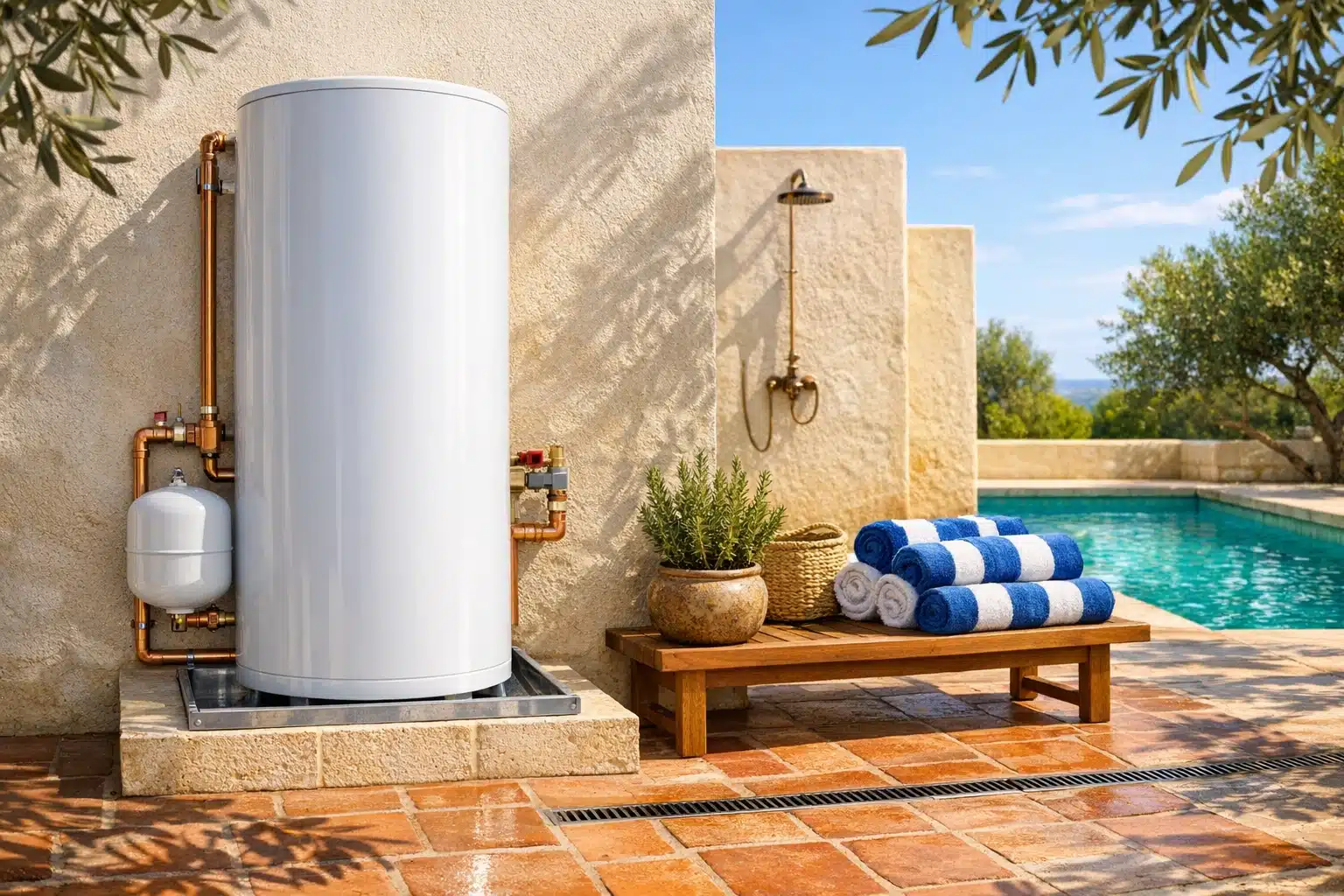
Placement matters too. The unit should be installed on a stable surface with enough clearance for service. In locations where leaks could damage finished flooring, a drain pan connected to an appropriate drain is a smart precaution. In some plumbing systems, a thermal expansion tank may also be required, especially where a pressure-reducing valve or backflow device creates a closed system. That small addition can help protect the water heater and piping from pressure spikes.
Several safety features deserve routine attention:
– Temperature and pressure relief valve: this critical device helps prevent dangerous overpressure conditions.
– Shutoff valve on the cold-water line: useful for maintenance and emergency isolation.
– Proper bonding and grounding: essential for electrical safety.
– Thermostat setting: around 120 degrees Fahrenheit is commonly recommended to reduce scalding risk and unnecessary energy use.
Maintenance on electric water heaters is straightforward but often ignored. Sediment can accumulate in the tank over time, especially in areas with hard water. Flushing the tank periodically may help preserve efficiency and reduce noise. The sacrificial anode rod, which helps protect the tank from corrosion, should also be inspected at intervals recommended by the manufacturer. Replacing a worn anode can extend tank life and is often cheaper than replacing the whole unit years too soon.
Tankless electric units need maintenance as well, particularly descaling in hard-water regions. Heat pump water heaters introduce another task: cleaning or checking the air filter so airflow is not restricted.
A skilled installer does more than connect parts. They verify panel capacity, confirm code compliance, test controls, and make sure the heater is safe under normal use. It may be tempting to see the water heater as an invisible servant that works until it doesn’t, but a little attention now can spare a flooded utility room or a cold Monday morning later.
5. Conclusion: Choosing the Right Electric Water Heater for Your Home
If you are a homeowner, landlord, remodeler, or first-time buyer trying to make sense of electric water heaters, the most useful takeaway is this: the right model depends less on hype and more on fit. A standard electric tank still makes sense for many households because it is familiar, available, and usually simpler to install. A heat pump water heater can be the smarter long-term investment where space, climate, and budget allow. An electric tankless unit may be excellent in compact settings or for limited demand, but it should never be chosen without checking panel capacity and real-world flow expectations.
The smartest buying process usually follows a practical sequence:
– Start with your daily hot-water habits, not a marketing slogan.
– Check your electrical system before falling in love with a high-powered model.
– Compare upfront cost with likely operating expense over several years.
– Consider maintenance access, noise, room temperature, and available space.
– Review warranty terms and local utility rebates, especially for heat pump units.
For busy families, reliability and recovery rate may matter more than squeezing out every last efficiency point. For owners planning to stay in a home for many years, a higher-efficiency model may repay the initial premium over time. For landlords, durability, serviceability, and compliance may outrank advanced features. In every case, the decision becomes easier when you treat the water heater as part of the home’s larger system rather than an isolated appliance.
There is something almost theatrical about hot water: it enters the scene without applause, does its work, and slips away unnoticed when everything is going well. That quiet success is exactly what most people want. A well-chosen electric water heater should not demand constant attention or complicated workarounds. It should provide steady performance, sensible energy use, and enough capacity for ordinary life to feel effortless. If you compare types carefully, size the unit honestly, and install it correctly, you will be far more likely to end up with a system that serves your home well for years.